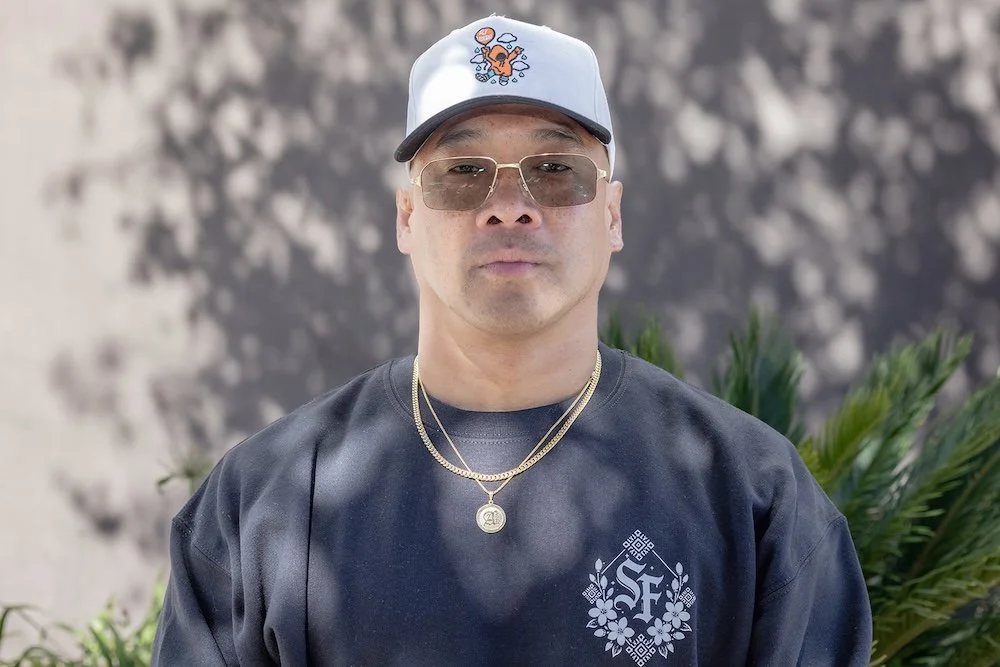
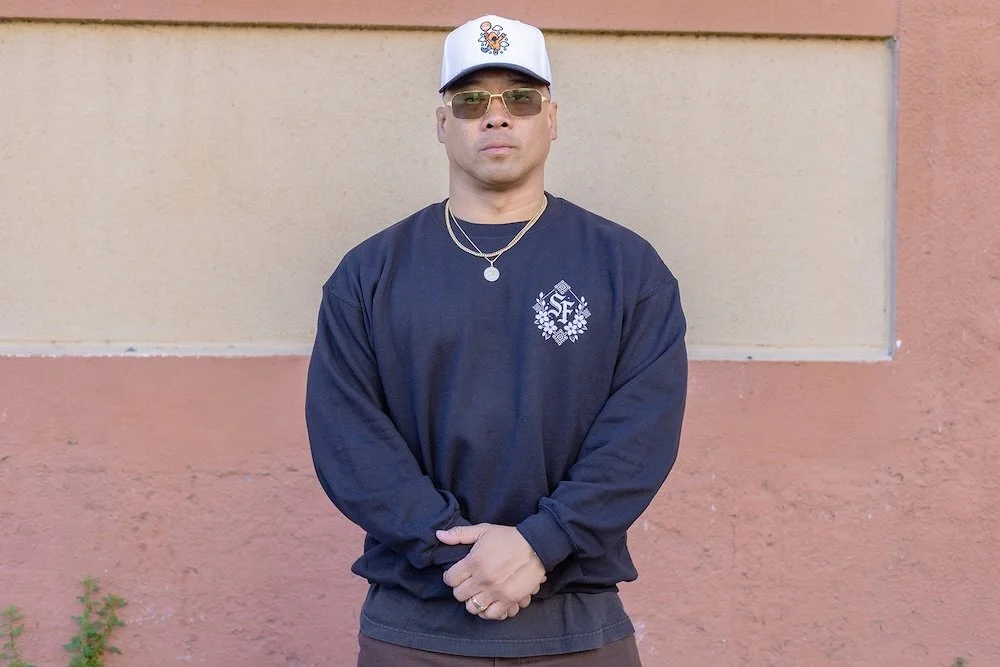
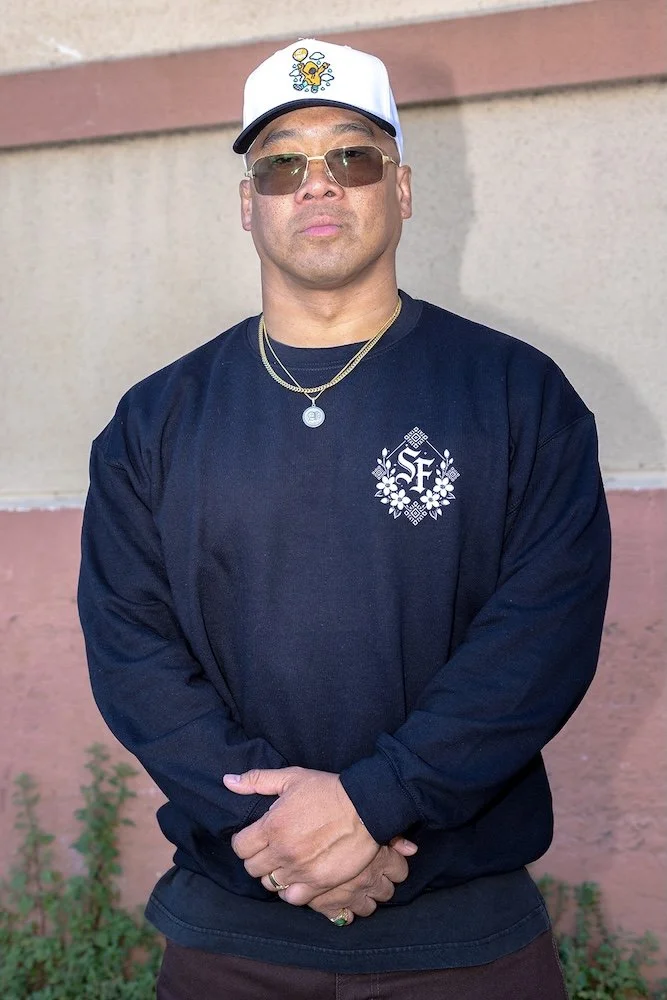
When he was young, Adonis Marcelino ate tacos in Mexico.
In this episode, meet and get to know Adonis, the force behind I Am Adonis Eats. We begin with the story of Adonis’s maternal grandma, a story he learned only recently.
It begins in The Philippines. Adonis’ grandmother, Luzviminda, was the first of his (and her own) family to come to the US. She arrived in San Francisco in the 1970s not yet knowing anyone, but understanding that SF and The Bay were destinations for Filipinos. She and her husband, who got together in their teens back home, didn’t get along. She decided to stay in the US despite leaving kids, including Adonis’s mom, behind.
And so Luzviminda stayed, met an older Filipino, and got re-married. She sent for her daughter back home, and bought a house in San Francisco. She worked as a host in the restaurant at the St. Francis hotel and saved all the money she could. No longer with her second husband, she made a bid on a home and got it. She and Adonis’s mom moved in. There’s a great story about the owner of the house, a Native American man, accepting the offer, low as it was, because it was the first offer and it would have been bad luck to reject it.
Adonis grew up in that house at Alemany and Geneva. After a couple of back-and-forths to The Philippines, his mom met his dad. Both were teens when they met. Adonis, their oldest kid, was born in 1979.
His dad comes from a large Filipino family hailing from Quezon City in Manila. He doesn’t know that story as well as he knows his mom’s. An aunt ended up in Queens, so Adonis has cousins out there. His dad came to SF with his parents. They lived in Visitacion Valley, he believes.
Adonis’s parents met as a result of both of them spending time in the Bay Area’s tight-knit Filipino community. Eventually, Adonis ended up with two younger siblings—first a little brother, then a little sister.
Adonis was born at St. Luke’s back when the Valencia and Cesar Chavez campus existed. His earliest life and San Francisco memories involve walking around Alemany and Mission. The family went to church at Corpus Christi. He recalls most of his neighbors being Italian-Americans and Jewish folks. They were almost all white.
At this point in the recording, Adonis goes into a sidebar about criticism he receives concerning the way he talks. He also chats about the “San Francisco accent.” It’s all really compelling stuff. His grandmother spoke mostly Tagalog to him when Adonis was young, and he believes it might have been his first language.
He shares other childhood memories, including driving down to the St. Francis hotel to pick his grandma up from work. He remembers Powell Street BART station and Woolworth’s. He also remembers The Gap, which replaced Woolworth’s. In fact, Adonis helped open The Gap store in the historic Flood Building. We go on a sidebar about The Gap’s SF origins.
I ask Adonis to rattle off the schools he attended. It starts with a preschool in Cayuga Park. From there, he went to Monroe Elementary in the Excelsior. His parents bought a house in Daly City, and so he ended up in Jefferson district schools there. Adonis highlights the outsize number of artists that came from those schools and that scene.
There’s a break in the recording because the fine folks at Frank Grizzly’s served our delicious tacos.
We pick back up with Adonis talking about Bay Area hip-hop. I ask him to indulge us on the topic of Nineties Bay hip-hop, and he obliges. Right away, he cites Psycho City, an infamous graffiti spot in San Francisco back in the day (it no longer exists, sadly). He got to go to Psycho City a couple of times, and describes seeing graffiti writers feeling like spotting a celebrity. The place was named because writers from Daly City had a piece there with those words, pointing to the influence the town to the south of San Francisco had on The City’s culture.
He goes on a sidebar here about the movie Boulevard Nights, which introduced gang-banging/turf culture in The Bay. Folks saw the movie and starting claiming different neighborhoods as their grounds. It’s a way to lay the groundwork for Adonis’s story of coming into The City as a Daly City kid—something he couldn’t mention without getting beaten up.
As a teenager, Adonis was hella into hip-hop. He dabbled in graf writing. He got into some trouble and spent time in juvey in San Mateo, realizing right away that it wasn’t cool. He tried break dancing—or “housing,” as his Filipino community called it.
I ask Adonis where food came to be so central to who he is and what he does. After informing me that I’m jumping ahead a little, he takes us through the rest of his teen years, when many people in his community were getting addicted to drugs like crystal meth. Friends went to prison and some passed away. Adonis read the writing on the wall and decided to punch out.
For Adonis, that meant joining the US Marine Corps. Even before this time, because his grandma worked in a hotel and his parents worked for United Airlines, Adonis traveled. He ate tacos in Mexico, as mentioned above. Joining the military a year out of high school, he was traveling again, all over the United States.
Adonis had an epiphany—he realized he’d been existing in a bubble.
Check back Thursday for Part 2 and the conclusion of Adonis’s life story.
We recorded this episode Frank Grizzly’s in the Bayview in September 2026.
Photography by Marcella Sanchez