Gina Mariko Rosales
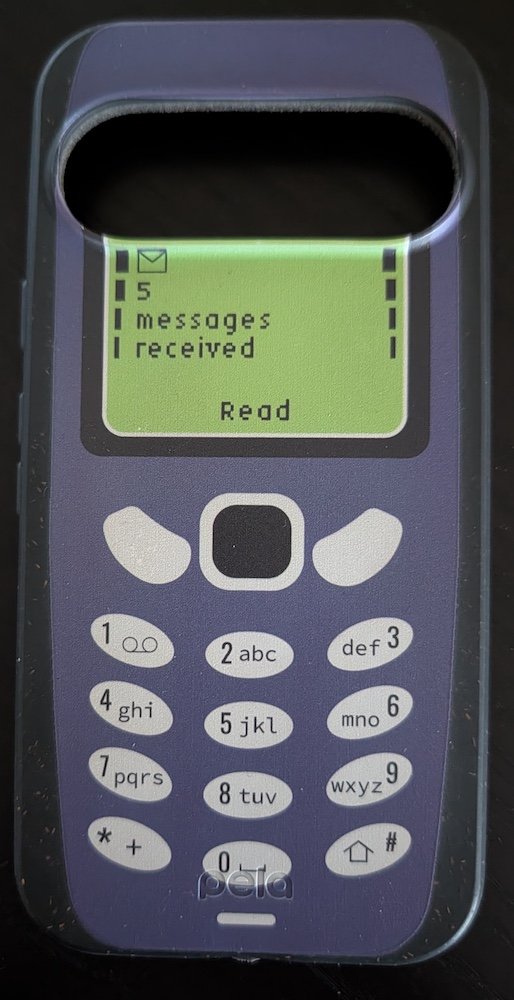
The phone case we talk about in the podcast.
Chances are, you’ve been to one of Gina Mariko Rosales’ events, even if you weren’t aware.
In this episode, which kicks off our Asian-American/Native Hawaiian/Pacific Islander Heritage Month programming, meet Gina. Born in Daly City, she’s lived most of her life on the Peninsula and in San Francisco. But let’s talk about how she got to where she is today.
Gina was born at Seton hospital in Daly City and her parents raised her in Pacifica. In her words, Gina “grew up with a bunch of skaters and surfers.” Sounds fun. But she was one of only a few Filipinas in her hometown. She was also shaped from an early age by her time in Catholic school, which she went to beginning with her preschool days.
She also a performer, dancing specifically, but we’ll get to that.
Gina is part of the first generation in her family to be born in the US. Her parents, Armando and Lillian, both came to this country from the Philippines for college in Ohio, where they met. Lillian’s family moved around the Philippines because her dad was an engineer. Gina’s dad is half-Filipino and half-Japanese—his Japanese lineage is from Okinawa.
Lillian came to The States to pursue international law. But life had other plans. She ended up getting married and having kids, and instead did consulting work. In starting to talk more about her dad, Gina goes on a tangent about how, in 2025, she was able to visit both her mom’s homeland in the Philippines and her dad’s in Okinawa.
Gina’s mom was the first in her family to come to the US. Then one of Gina’s aunts came. Then slowly, the family starting working on getting more and more members to relocate. Eventually, her grandparents and all her mom’s siblings arrived in The Bay. Suddenly, Gina had hella cousins around.
Her mom’s family has done quite a job tracing their own lineage. Gina says they’ve been able to trace the line back six or seven generations. And many living members of that clan get together every couple of years for massive family reunions. Think 250–300 folks. I love that.
Though she’s not 100-percent certain, Gina believes that it was jobs that brought her parents the The Bay after they met at college in Ohio. Lillian worked at Levi’s and Armando at Charles Schwab. They had their first child, Gina’s older brother, out here. That was the early Eighties. Around mid-decade, Gina was born.
Her early memories are of her time in Catholic preschool. Her school was pre-K through eighth grade, so Gina says that once you’re labeled by your peers, it sticks. And those students are with you for a minute. Ninth grade provided a chance for Gina to get out of that situation. She “busted out” and attended Sacred Heart here in The City.
She remembers being pretty little and visiting her mom at Levi’s in San Francisco. She climbed on and ran around the now-defunct Vaillancourt Fountain. They’d go to Fisherman’s Wharf. And they’d visit her grandfather’s grave at the San Francisco National Cemetery in the Presidio, followed by trips to Japantown for sushi.
We sidetrack here after Gina talks about how St. Mary’s was their church and I mention that it’s the “washing machine” and “city titty” church. Gina wasn’t familiar with either term and I’ll characterize her reaction as, simply, mind blown.
Because her school, Sacred Heart, was nearby, Gina describes the scarce parking available for students and a lottery system they all had to operate under. We go on another sidetrack here to talk about ways to get around DPT’s trickery—chalk marks and all that.
At her school, Gina was in the choir and she was a member of the step team. She’d often stay around after a day of school to participate in both groups. She and her friends would frequent 1000 Van Ness movie theater and Venture Frogs, where they’d drink boba and eat popcorn chicken. I remember both spots from my early days in The City, around the year 2000.
Gina says starting at Sacred Heart after doing K–8th in Pacifica was refreshing. She made friends with people who looked like her, finally. She was part of an Asian girl crew, in fact. Most of those girls were also on the step team and so much bonding was happening. So was “parking lot pimpin’,” whether it was in San Francisco or Daly City, after school or on the weekends.
She talks about the prevalence of unhoused folks around her school. Sacred Heart would have outreach days where students would make sandwiches to take to those people. Gina looks back fondly on that time.
She and her friends would also hang out in Japantown, taking the bus up Geary or just walking the few blocks down. They also went to hella under-18 parties that had names and themes. There were rave rooms and hip-hop rooms. Gina calls them “the early party days.” These were the days before “face the DJ” parties.
For college, Gina went across The Bay to UC Berkeley. That meant moving out of her house in Pacifica for the first time. She lived in a dorm her first year, then moved into a co-op house and eventually into an apartment with friends.
Philosophy and education were Gina’s majors. She intended to graduate and become an English teacher. We go on another sidetrack about studying philosophy (something we have in common) before Gina explains how grad school ended up not working out for her.
And we end Part 1 with Gina’s story of graduating college in 2008 when the Great Recession hit. Her dreams were dashed and she moved back to Pacifica to live with her parents. She applied for countless jobs and ended up getting into AmeriCorps VISTA, a branch of the larger organization that focuses on alleviating poverty. The program wants its members to experience a level of poverty themselves. It paid just enough for Gina to move to San Francisco.
In Part 2, we pick up right where we left off in Part 1, with Gina’s first official address in San Francisco.
In talking about finding a place to live in The City, Gina mentions that all her friends either live in rent-control apartments they’ve been in forever, or they’re able to live in a place that someone in their family bought and has kept in the family. When she tells me where that first apartment in SF was, I let her know that my first place here, back in 2000, was less than a block away. As we’re name-dropping hotspots on the block, I have a brain fart and can’t remember the name of Cordon Bleu, the rad greasy-spoon Vietnamese joint still there on California near Polk.
From that first apartment, Gina would take Muni to her job over in Potrero Hill. Back then, in the days before smartphones, she’d read on her long, chill Muni rides. She’d come home, make dinner with her roommate, and maybe head out to Polk Street or for karaoke in the hood.
That AmeriCorp VISTA gig lead to a job doing literacy work. At that part-time job, Gina also started doing events. She also ran a non-profit dance company, and was trying her best to make both things work out for her.
We step back to talk about Funkanometry SF, Gina’s dance company. It started in LA, moved north, and the founders handed Gina the keys, so to speak. That happened in Gina’s senior year at Berkeley. Because the dancers she was directing were older and more experienced, and because she had literally no experience running a non-profit or a business, she went to Barnes and Noble to buy a copy of a book from the “For Dummies” series.
In Gina’s time running it, Funkanometry took off. They received invitations to perform internationally, to places like the Philippines, the UK, and Colombia. On the back end, Gina figured out a way to pay herself $600 a month. She felt like she’d made it. Despite all those successes, though, the company didn’t make money.
The low-paying, part-time job and non-profit dance company was fun, but it wasn’t meant to last. She got hit up on LinkedIn by a recruiter for Google and got an interview. Gina had reservations and talked with her mom about them. Lillian told her to daughter to go and listen to what they have to say, and so that’s what Gina did. After the interview, she still didn’t know if it was a good fit, but she accepted the offer regardless. She was now a software engineering recruiting coordinator at Google.
To get to work, Gina took the infamous Google bus. As someone from The Bay who already had immense pride in her city, she felt ashamed. The money was good, but standing in line to wait for the hated busses felt bad. When cars or pedestrians passed by while she waited, she wanted to let them know that she wasn’t “one of those people,” that she’s from here and runs a non-profit dance company. It didn’t matter. Her internalized shame remained, but she says the job was fun enough to make up for it.
That Google contract job turned into full-time work, and Gina stayed at the company for seven years. During this time, Gina met and started dating a San Franciscan who grew up in the Inner Richmond. They got engaged and Gina moved to that hood. She still worked at Google and now waited for their corporate bus in a chiller area with fewer protests.
Then Gina’s family suffered a tragic loss. One of her first cousins died by suicide. She says the experience “broke [her] family open,” meaning it obviously hurt them all, but it also brought them closer. It made waiting for the Google bus that much more impossible for Gina, too. She’d moved into a new role at the company and was doing events for them. She decided it was time to branch out on her own and do what she loves.
She was able to go part-time while launching her own events company. She’d tried to quit, but Google asked her to stay on. It ended up serving her well, as it provided some needed income while she undertook all the stuff it takes to start a company from scratch. The first event she produced under her new moniker, Make It Mariko, was Undiscovered SF, which began in 2017 as the first Filipino night market in SOMA.
The first Undiscovered SF was such a success that it inspired Gina to transition Make It Mariko to her full-time work. The stories goes like this: A friend let her know about the nonprofit SOMA Pilipinas. She met with those folks and pitched a launch event. They applied for and received a $5K grant to do the event. A friend was able to wrangle $150K on top of that. That one launch event turned into six events, spaced out one per month.
In 2020, Undiscovered SF went virtual. Gina had her tech background, and they had plenty of time to transition. This allowed them to connect Filipinos across the diaspora, sitting on panels and interacting with one another. And of course, there were DJs from all over.
Prior to the pandemic, in addition to many other kinds of events, Make It Mariko had quite a lot of corporate event-planning business. Since COVID, though, a lot of that went away. Gina decided she wasn’t gonna sit around and wait for big events to hire her company. She wanted to build on the success of self-produced events like Undiscovered. The seeds of what became POC Food and Wine were planted.
Gina loves wine. During the pandemic, she got a scholarship to join a wine program where she was able to dive into that world. One of the topics was pairing, and so she was able to take that knowledge and apply it to the POC Food and Wine Festival, pairing POC chefs with specific wines and other beverages. Attendees were encouraged, but not required, to navigate the space and its makers along the lines laid out for them by Gina and her staff. I’ll just say: It was one of the best, most unique experiences I’ve had in my 26 years here in the Bay Area.
We end the episode with me letting Gina know how much I also enjoyed this year’s Love Thy City event, which took place in February. It was to celebrate Make It Mariko’s 10th anniversary and to establish a relationship with The Foundary space in South of Market. The love (right there in the name) that night was palpable—love of San Francisco, of community, of one another.
All of these events—Undiscovered, POC Food and Wine Festival, Love Thy City—for me show how dedicated Gina and her people are to uplifting real people doing extraordinary things.
Find Gina all over the place, really:
Brave New Spaces, whose goal is to help creatives eventually own their spaces
Make It Mariko, her events company
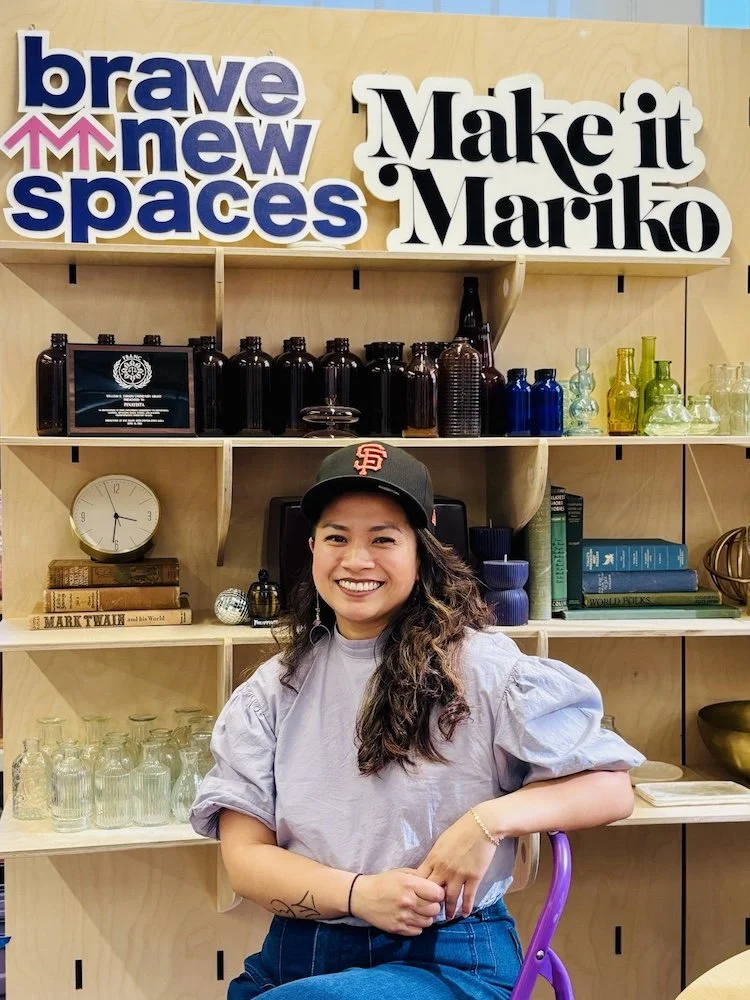
We recorded this episode in the Brave New Spaces at Make It Mariko in South of Market/SOMA Pilipinas Cultural Heritage District in March 2026.
Photography Mason J.