Photographer Dave Glass
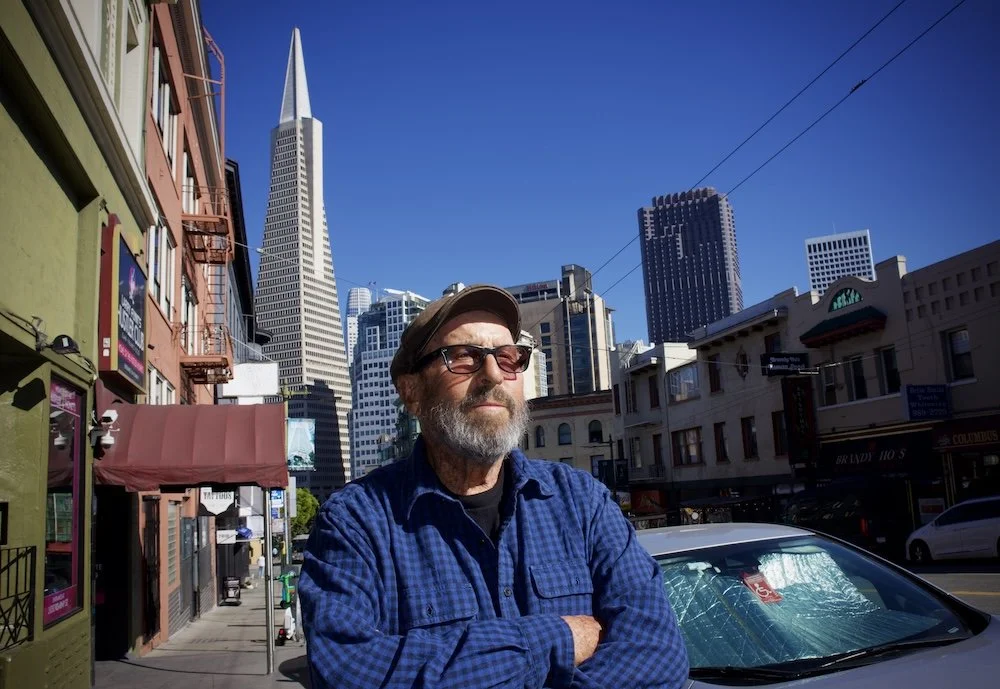
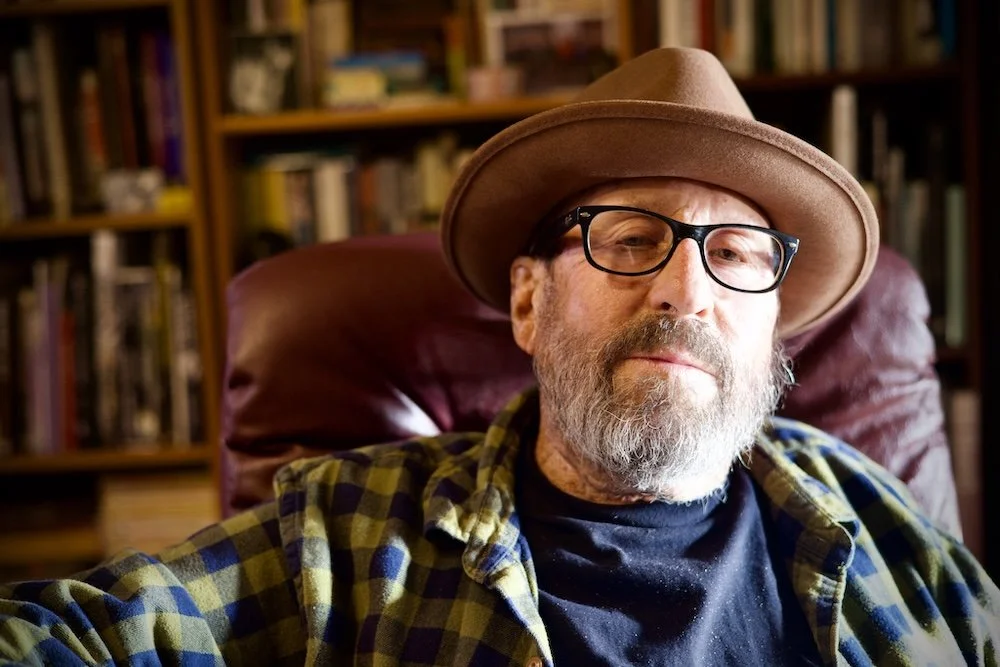
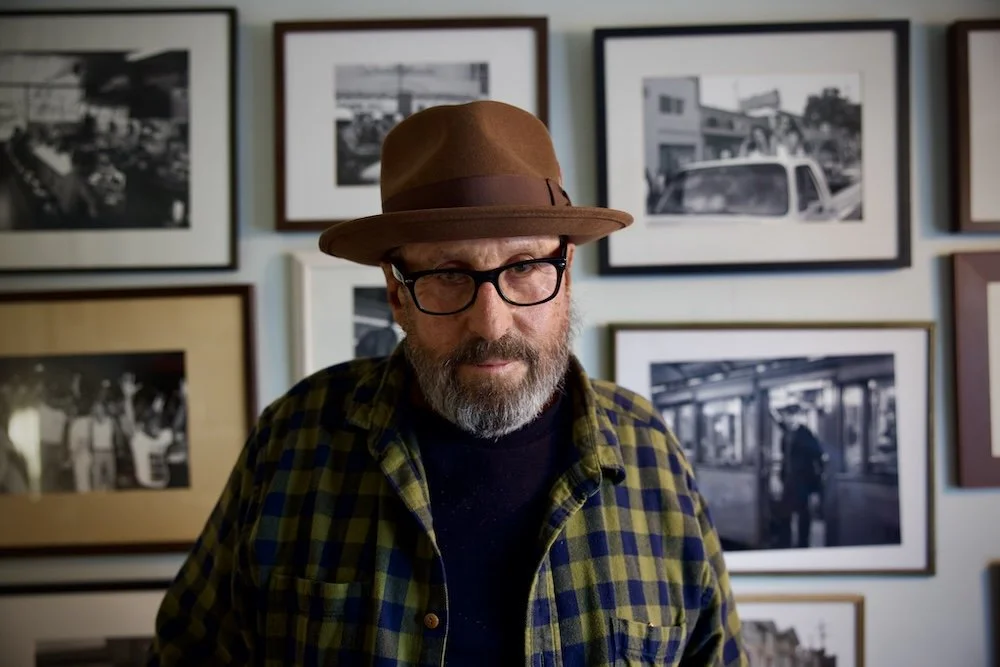
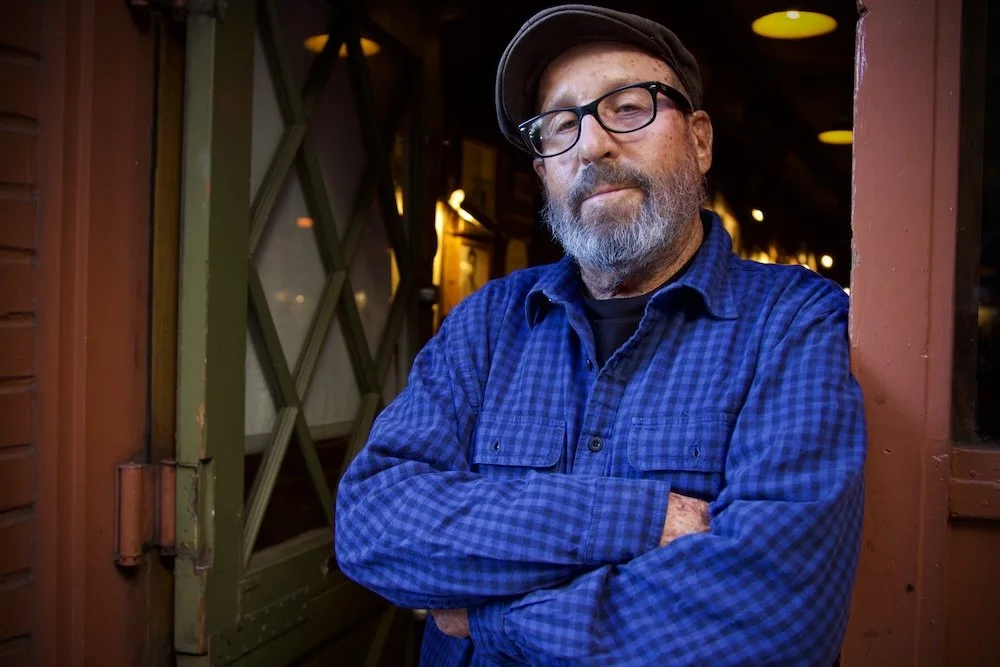
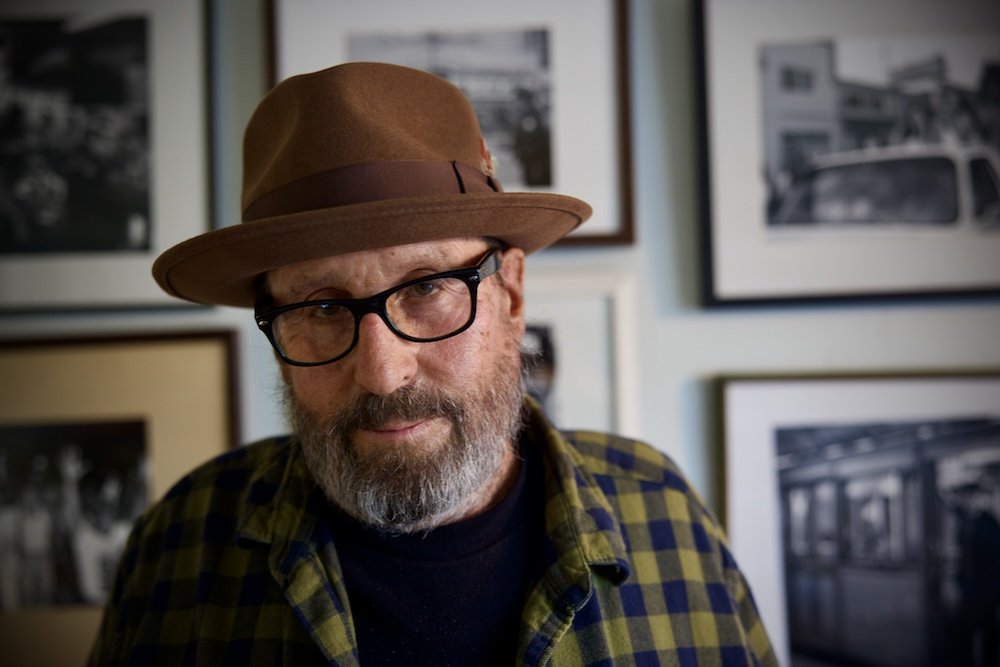
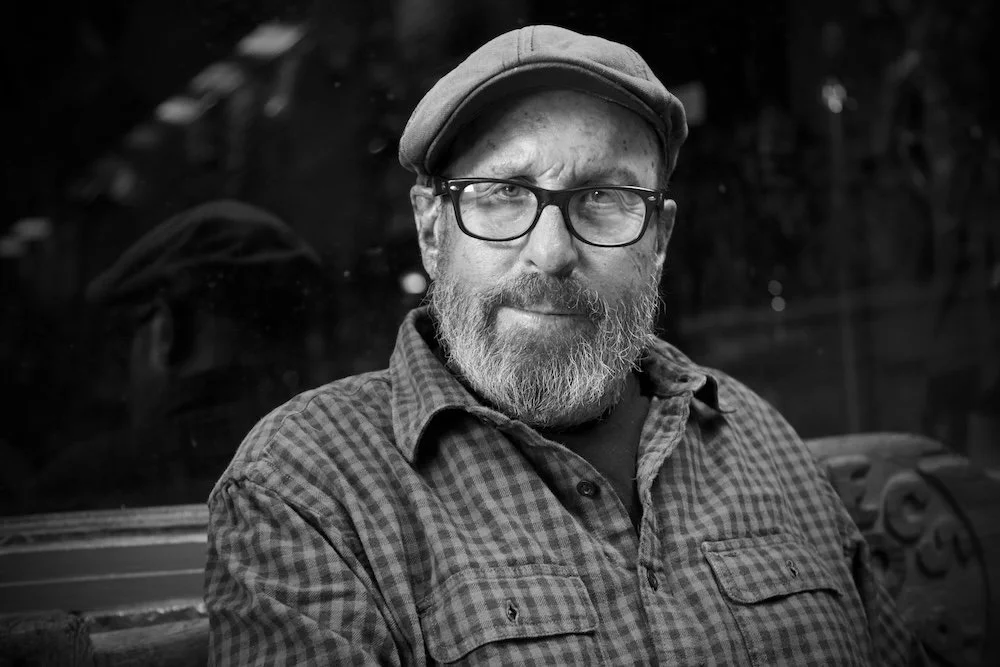
Dave Glass’s Polish parents met at a displaced persons camp in Europe after World War II.
In this Season 9 inaugural episode, meet and get to know Dave. A born-and-raised San Francisco, Dave joined me back in August in the SF Public Press office/studio at Warfield Commons to record the first-ever Storied: San Francisco live episode. Our talk that night comprises this episode.
Dave’s mom and dad got married at that camp in Germany and had their first kid, Dave’s sister, there. The young couple wanted to come to the US, but had to wait another five years in Europe for that to materialize.
Finally, they made it, via the port of New Orleans. Their American sponsor lived in Stockton, which they made their way to by trains and buses. Dave’s dad later told him that when they arrived in California, Stockton looked to him like all cowboys and Mexicans.
The family’s sponsor owned a ranch, and the arrangement was that Dave’s mom and dad would work there. One day, his dad’s boss sent him to San Francisco, an hour or so away, for supplies. One taste of The City, and his dad knew he had to move his family here.
It was early 1951 and Dave’s mom was already pregnant with him. The family made the move to the big city regardless. They settled in the Western Addition on the corner of Webster and Fulton. This was before redevelopment, mind you. In addition to its sizable Black population, there were also a significant number of European refugees in the neighborhood, too. Dave fondly remembers being a little boy and going to the Ukrainian bakery at the corner of Webster and McAllister.
Other memories from Dave’s early days include vague visions of the Acme beer brewery across from his house. Dave lets us know that today, there are remnants of that building still standing.
Around the time Dave started school, his family moved to the Sunset District. This is when his memories really get going. He went to Parkside Elementary, which is today known as Dianne Feinstein.
Dave rewinds a little to share the story of when Eisenhower visited SF as president. Dave’s mom got him, his sister, and herself dressed up. They walked down to Van Ness, where the presidential motorcade was set to pass by. He recalls the president sitting, not in the car’s seat, but above it, in open air, riding down the avenue waving at folks. So much about this would never happen today.
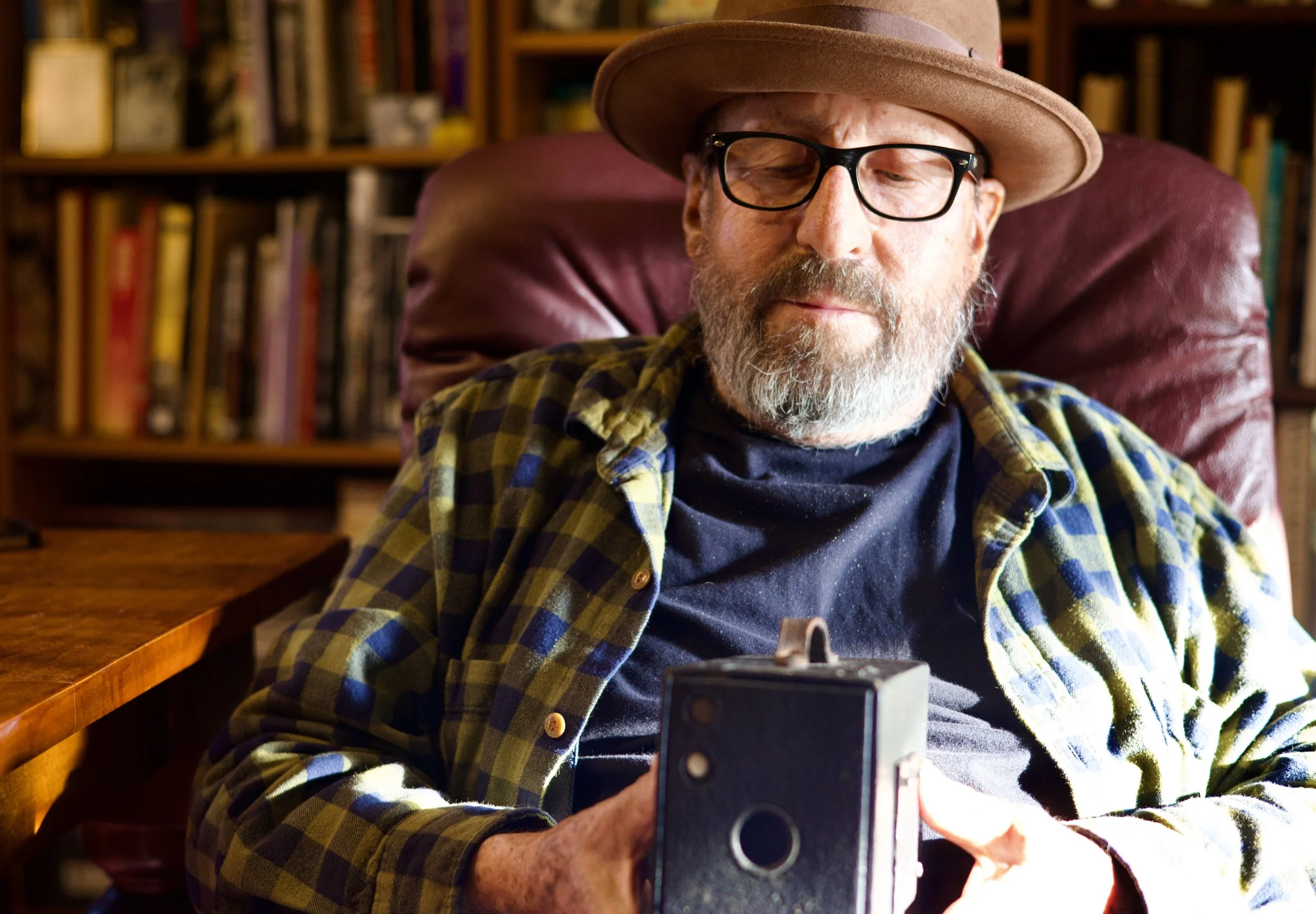
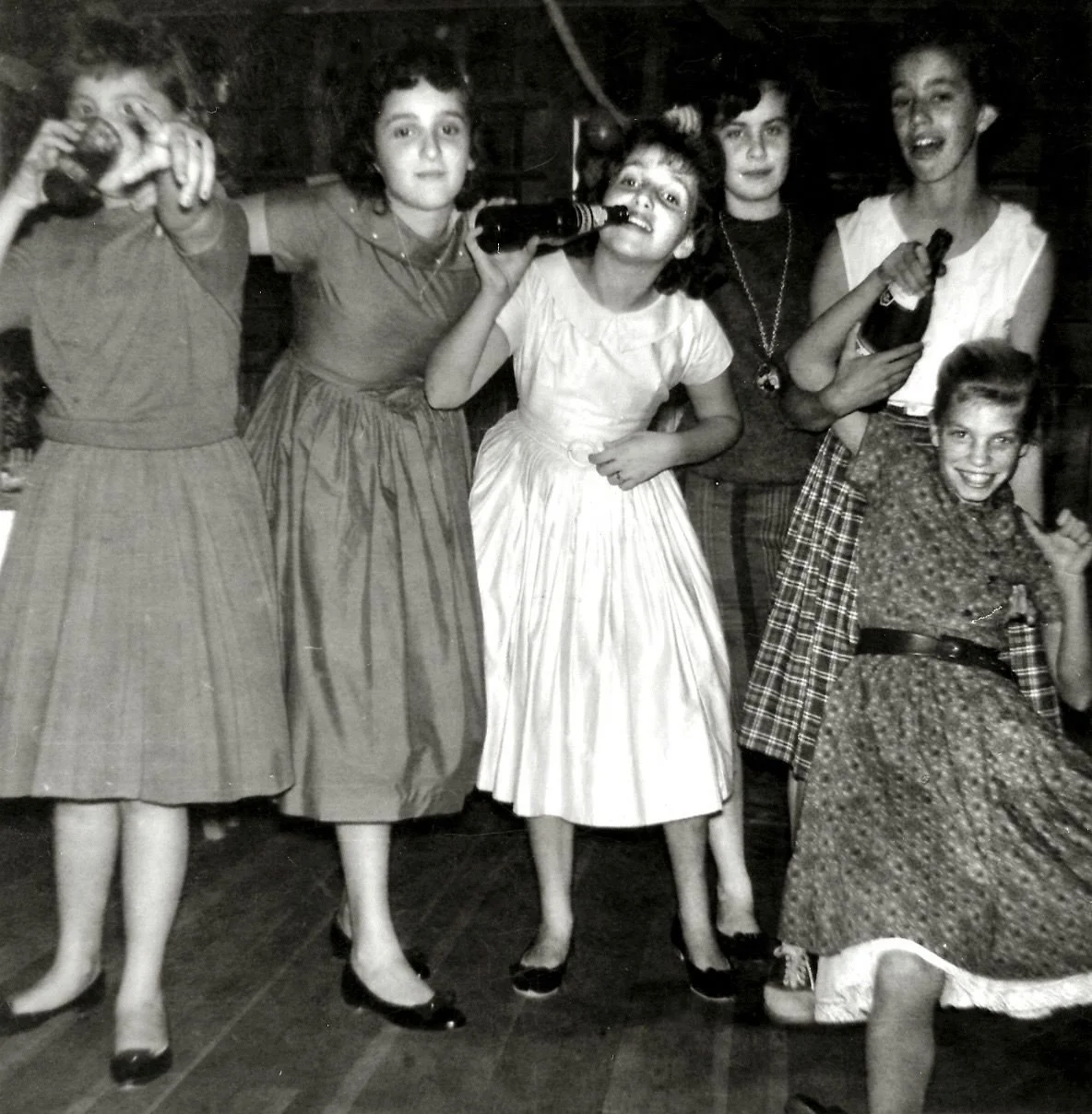
When he was 10, Dave got his first camera. At our live event, he shared a photo he took with that camera at his sister’s birthday party, seen in a gallery on this page. It’s one of the oldest photos he has that he took himself.
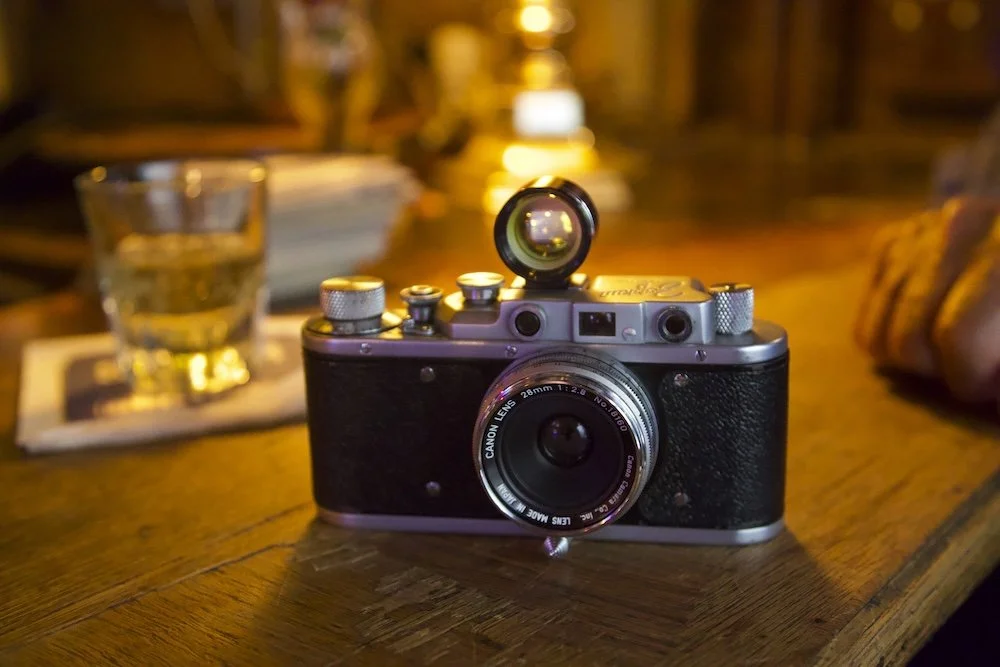
At that time, Dave was just a “kid with a camera,” not serious about the art whatsoever. But his dad had a Leica camera and did take photography more seriously, at least when it came to family photos. He had bartered for the camera when he lived in the displaced persons camp in Europe, and had photos from that time. Dave still has some of those pictures.
We go on a bit of a sidebar here, thanks to my question about how folks got their camera film developed back in the day. We also chat about the nature of film vs. digital.
When he was in high school, Dave joined the photo club and developed in a darkroom for his first time. He says it was around this time that he started to have an affection for photography.
We have to mention that he went to Lowell, which came after time at Herbert Hoover Junior High School. Dave points out that, even back then, “smart” kids went to Lowell, including his sister. Dave says he more or less got in on legacy, not good grades. He brought that with him through high school, and chose to go to City College when he wasn’t able to get into four-year schools.
In 1969, City College’s photography program was a serious one. Dave considers it blue-collar, in fact, aimed at turning students into professional photographers. Dave ended up taking photos for the school paper, something he loved doing.
I ask Dave about the late-Sixties in SF, and he obliges. He was 16 when the Summer of Love happened, and living just a few neighborhoods away from the Haight/Ashbury, his eyes were opened. He and his friends would visit the Haight every couple of days. He says it got so crowded with tourist buses and people that The City made Haight a one-way street. Still, they saw bands like Grateful Dead, Jefferson Airplane, and Country Joe and the Fish at small venues or outdoors in the park.
We go on a sidebar here to talk about The Fillmore back in the day.
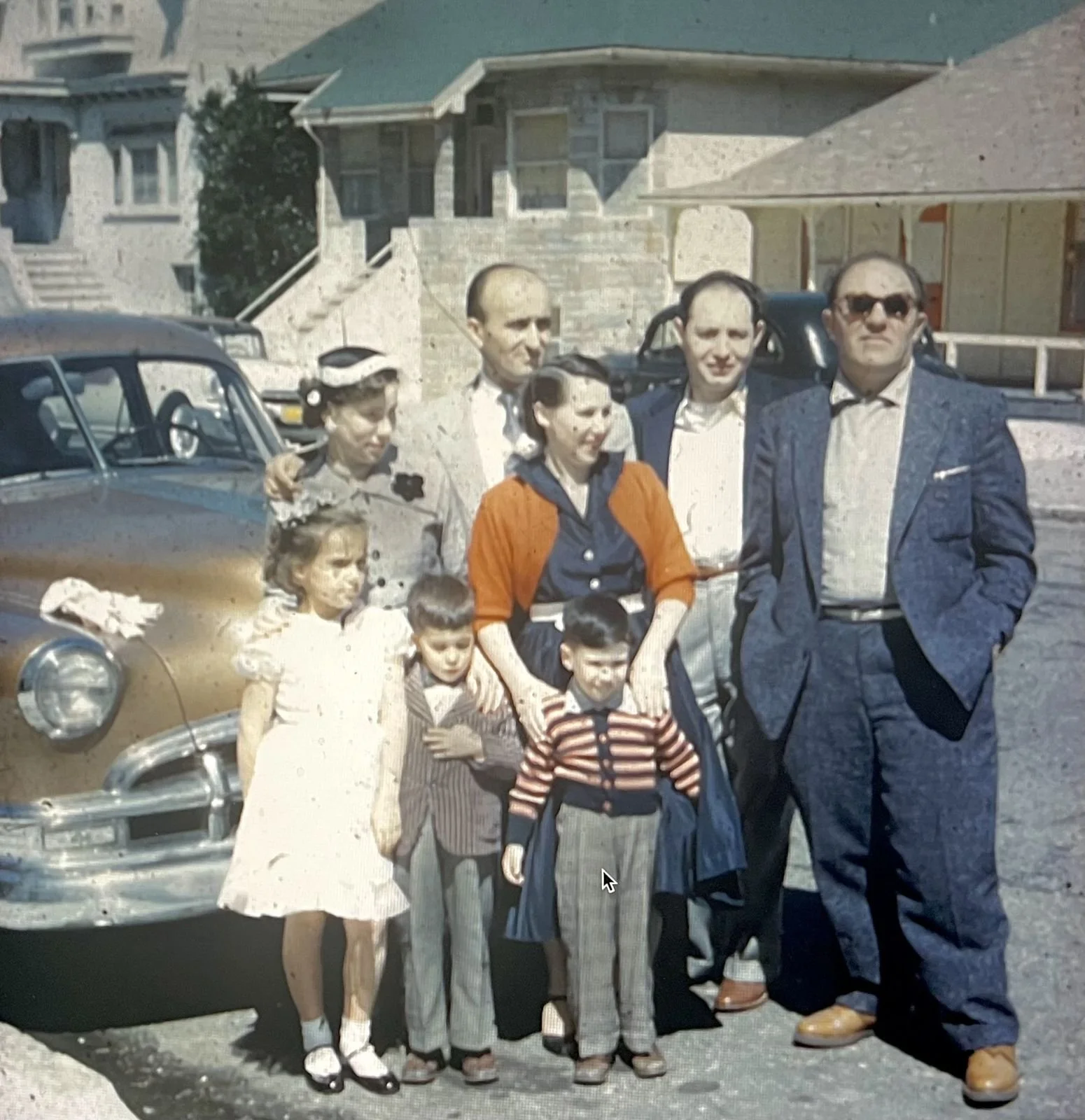
Dave’s first job, which he had while still in high school, was selling shoes at Kinney Shoes (IYKYK) at Serramonte, which had just opened. Dave shares a family photo and talks a little about it, also available here in the gallery.
Eventually, relatives moved to San Francisco and lived nearby Dave’s family, so he grew up with cousins and aunts and uncles. Dave confirms that it was the case that he and his friends, like many folks I talk with who grew up back then, pretty much did whatever they wanted after school, with the understanding that you go home when it gets dark out. His stories include building skateboards out of wooden 2×4s and roller skates.
Then we talk about a significant turn in Dave’s life. It was the late-Sixties and the war in Vietnam was heating up. The draft was in effect, and the number of units Dave was taking at City College had fallen below the threshold for deferment. That year, 1969, had seen more US casualties than any year prior. His parents, having escaped war-torn Europe earlier in their lives, did not want their son serving in the military in any capacity. Some of his dad’s relatives had settled in Paris after WWII. They helped arrange for Dave to live there for about six months starting in the fall of 1970.
In Part 2, we pick up where we left off in Part 1, with Dave’s time in Europe to get away from being drafted to fight in Vietnam. By that time, with a couple years at City College taking photo classes under his belt, Dave had built a portfolio. He took all his gear with him because he didn’t know whether he was ever coming back. His French cousin had a friend whose mom worked at the US Embassy in Paris. Dave got about a dozen photos into a group show at the American Culture Center there, his first public showing. Through another connection, he was able to print photos for the show at the Sorbonne. The National Library of Paris ended up acquiring all of Dave’s photos from that show, and they’re still there today.
Lodgings with his French family were barely adequate, and definitely crowded. He had a friend, also a draft dodger, living in Scotland. And so Dave decided to move to the UK. He and his cousin had bought a car together, and he ended up taking that car to Leeds in northern England. Locals there took Dave in, and so he stayed there, rather than Scotland, for another half-year.
We go on a sidebar thanks to my out-of-left-field question about Dave smoking cigarettes when he lived in Europe. We also talk about partying as a young person over there.
At the end of 1971, Dave returned to The Bay. It was safe by then, he says, because there were so many other draft dodgers. He shares a tidbit about how, before he left, if you had gone to the intersection of 19th Avenue and Lincoln, you would see at least half a dozen young men holding hitchhiking signs that said, “Canada.” A few years down the road after Dave’s return, Jimmy Carter granted amnesty to all the draft dodgers.
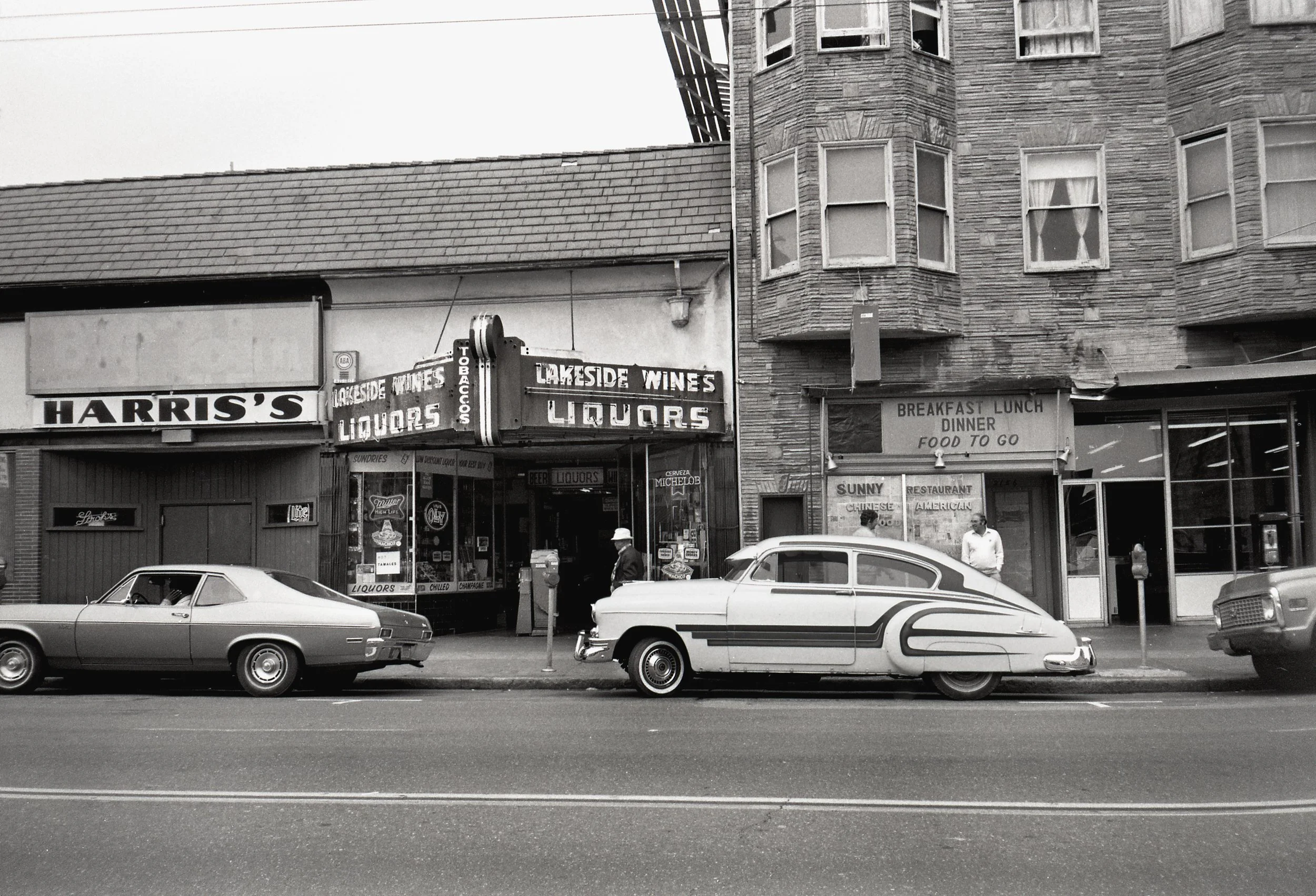
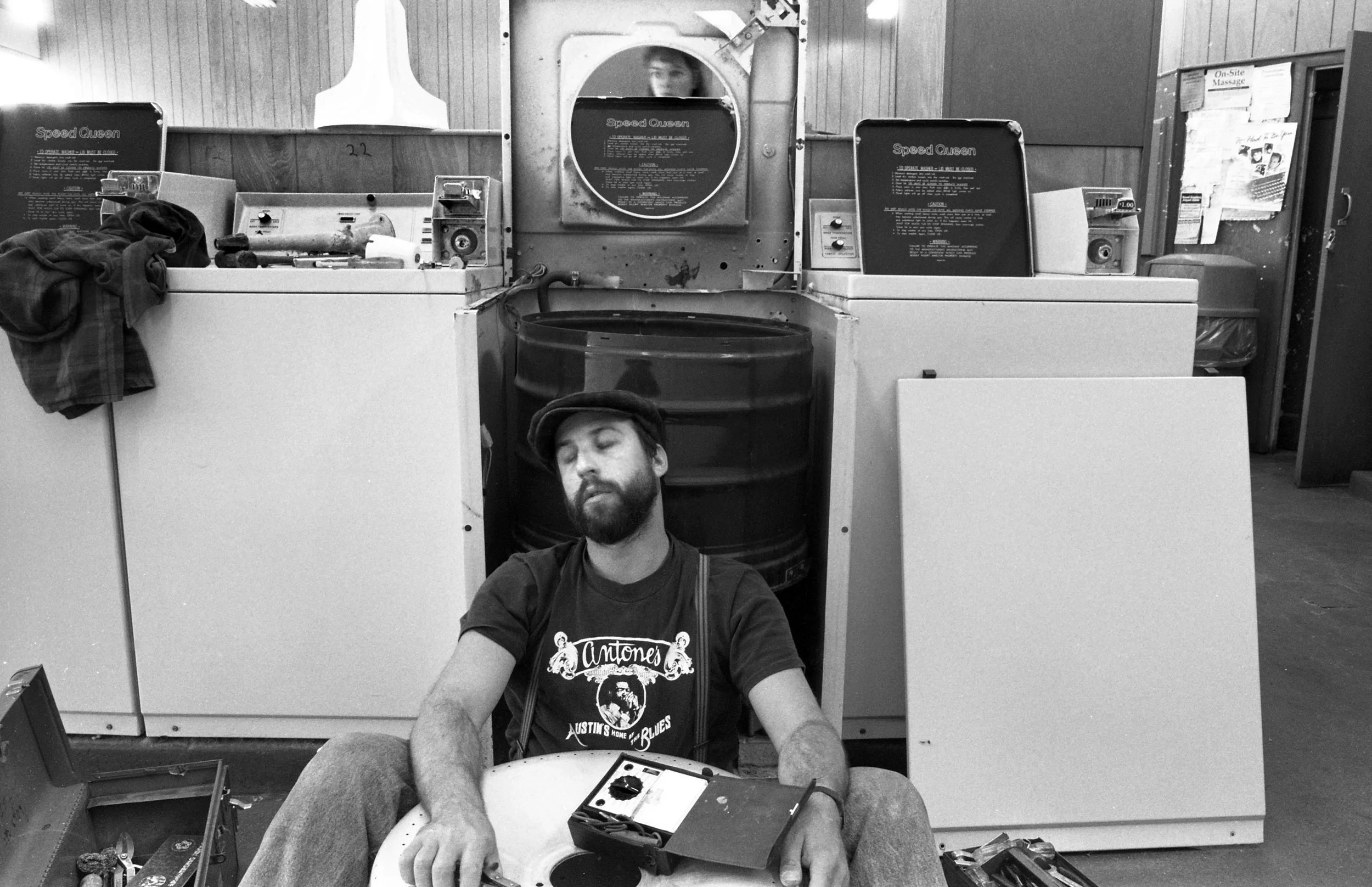
At our live event, he next showed a photo from Mission and 18th Street that shows, among other things, Lakeside Liquors, Dave’s family’s business back then. His dad and a partner owned and ran the place, and Dave worked there. His dad also owned a laundromat on the block. His dad claimed that his was the first full-service, coin-op laundromat in The City. It was 1957, and we’ll just go ahead and take his dad’s word for it.
As a young man, Dave learned to fix those washing machines and dryers, which he says “were always breaking down.” And that’s how he got his first taste of appliance repair, a career he spent 25 years in. When his dad retired in the Eighties, Dave opened his own joint—Little Hollywood Launderette on Market near Laguna. But by the time he opened Little Hollywood, unattended laundromats were fading in popularity, for various reasons. So Dave included attendants and wash-and-fold service at his place, as well as a dry cleaner next door. He ran Little Hollywood from 1989 until 2007.
Dave shares the story of a music video that was shot mostly inside Little Hollywood. A then somewhat up-and-coming artist called Del the Funky Homosapien shot the video for his song “Made in America,” directed by Michael Lucero, in a funky laundry spot on Market. Read all about that in this story from Hieroglyphics. Dave’s behind-the-scenes story of that video shoot is fun.
Back in his repairman days, Dave would travel from the Mission to the Western Addition regularly, as well as trips out to the Sunset and Richmond districts. He got to know his city even better. He knew all the laundromats, including the spot that would eventually be his own.
In 2007, Dave decided to retire. That gave him more time with his cameras. Three years later, his parents really started aging and needed more and more care. To help out, Dave took over running his dad’s businesses when he was no longer able to. He did continue taking photos during this time, though. In fact, he’d been taking photos since his return from Europe back in the early Seventies.
Photographers from Dave’s era didn’t commonly show their work. They had boxes full of negatives instead. Eventually, though, someone turned Dave on to a photo-sharing site, and he acquired a scanner and went to work. He enjoyed it, and leveled up on the scanner. He set out to scan all of his negatives. He spent the next roughly 10 years scanning (in fact, he adds, he’s still scanning to this day).
Through those early photo-sharing websites, Dave started to make connections in the SF photo community. Eventually, Troy Holden reached out and asked Dave to be in a photo show at Cha Cha Cha, back when the Mission Street location was still open. A year later, he met Adrian Martinez at Michael Jang’s open studio in the Richmond District. Adrian, Troy, and Dave formed the San Francisco Photography Club. He figured he could serve as a mentor to the many younger members of the group. But it turned out the other way around.
Dave points to the young photographers in the club that came from punk rock and skateboarding backgrounds (communities that are near and dear to my heart, as I spent countless years of my childhood and early adulthood in both). Dave considered their art to be edgy and good. It reminded him of work by Ken Hayman, who in the Eighties published Hip Shot. Those young photographers’ style wore off on Dave, and point-and-shoot street photography is what he mostly does today.
At this point in the conversation, Dave points to the inspiration of Hamburger Eyes, a photo magazine founded by Ray Potes in San Francisco in 2001. There’s an exhibit up at the SF Public Library’s Main Branch through Sept. 24 celebrating a quarter-century of this amazing publication’s work. Dave has one photo in that exhibition.
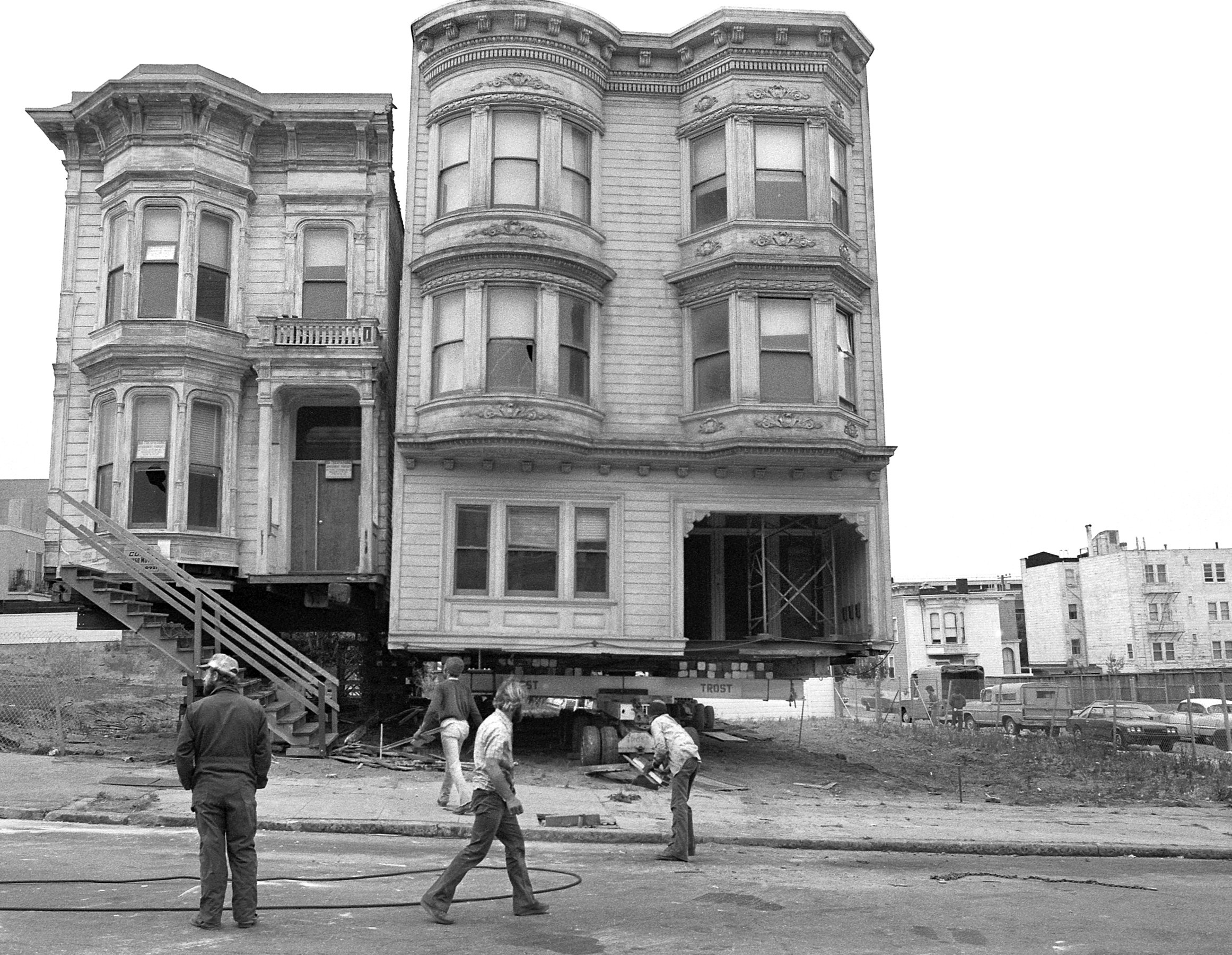
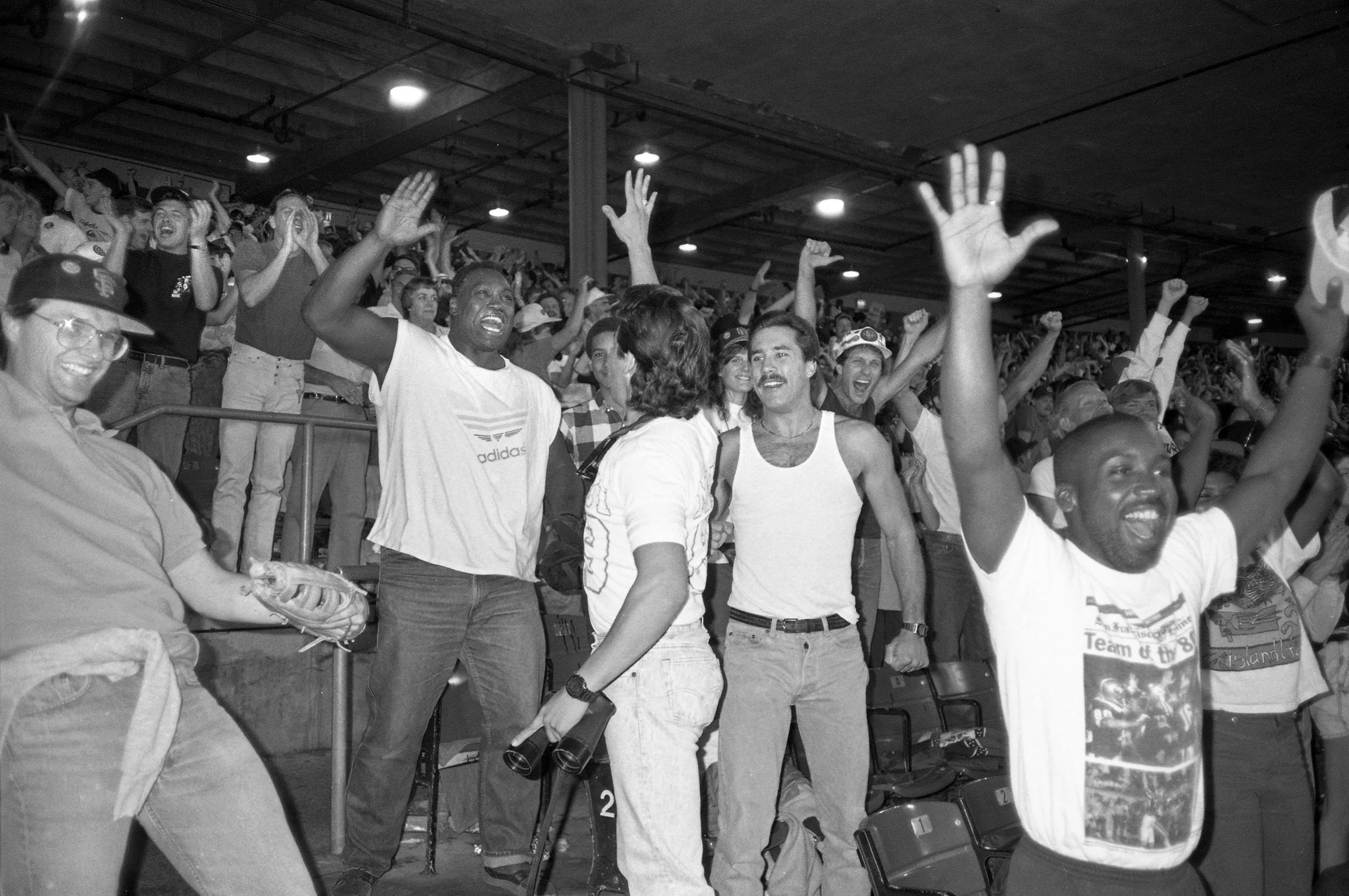
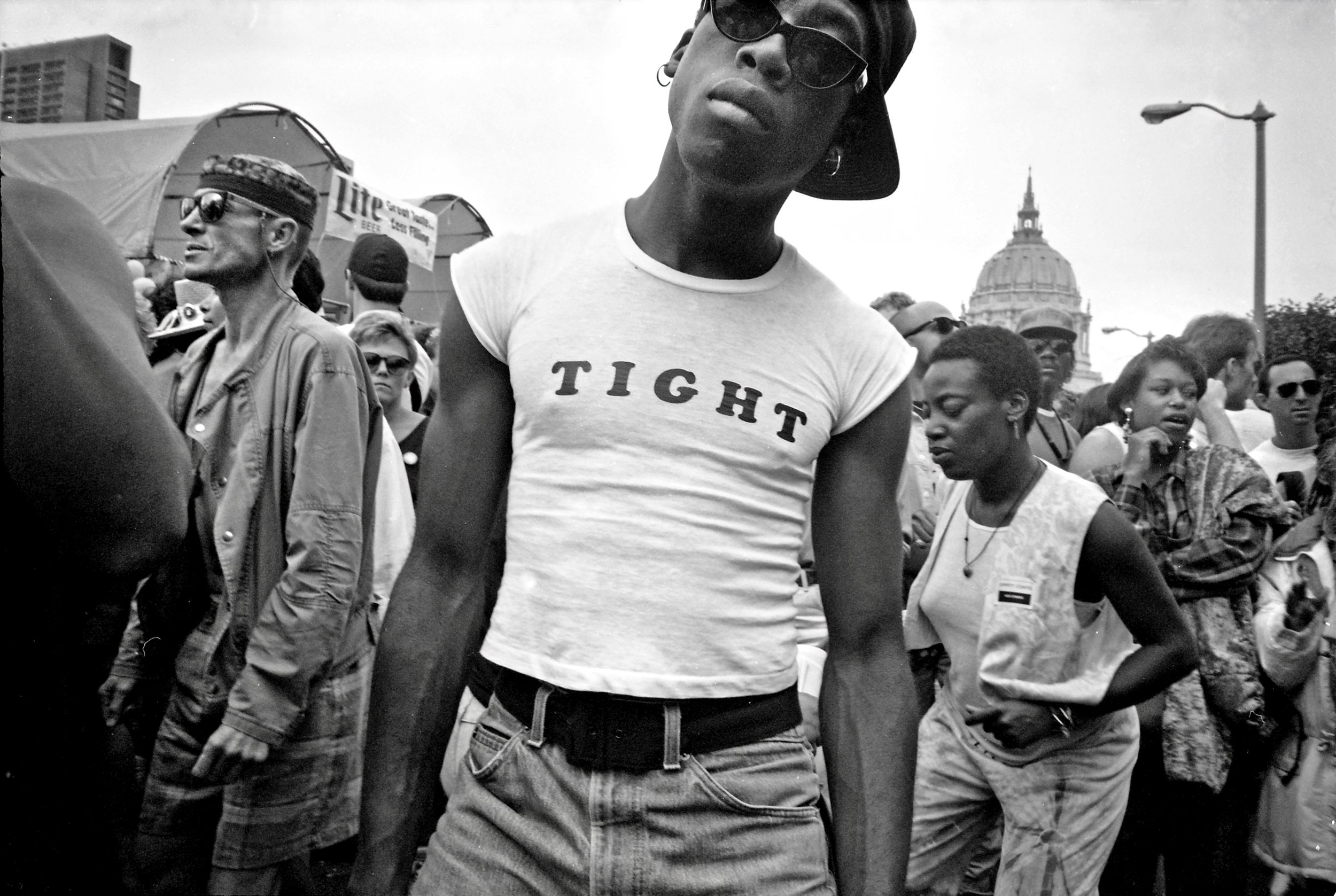
Dave talks about another of the photos he shared that evening, which is also available in the gallery on this page. It’s a photo he took of the moving of a Victorian house out of the Western Addition during the so-called redevelopment (read: gentrification) of that neighborhood. The next photo he showed was from Candlestick Park in 1989. Next is an example of Dave’s street photography—a photo from a Nineties Pride Parade, taken near City Hall.
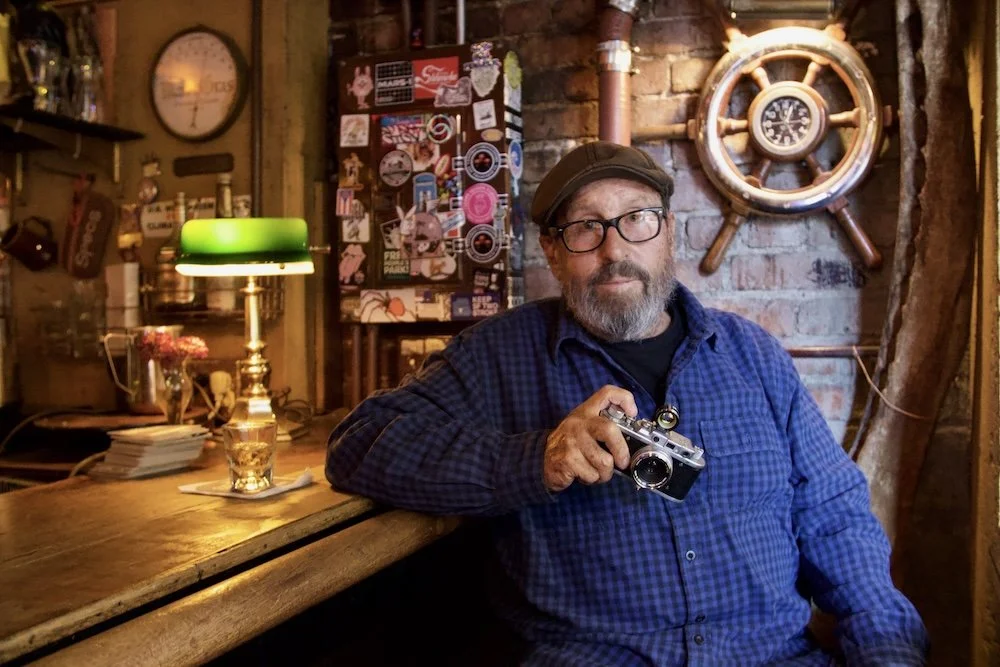
I ask Dave whether he ever shoots color photos, because everything of his I see is black-and-white. He says that in the early days of digital cameras, he shot some color. He ended up shooting about 10 years of digital color, and he liked it. But the lure of film and black and white was too strong. Dave sold all his digital cameras. He says that, nowadays, smartphones do just as well as or better than cameras did back then. Today, he uses vintage cameras, vintages lenses, and black-and-white film, a combination that gives you a look and feel that you just cannot recreate with a digital camera.
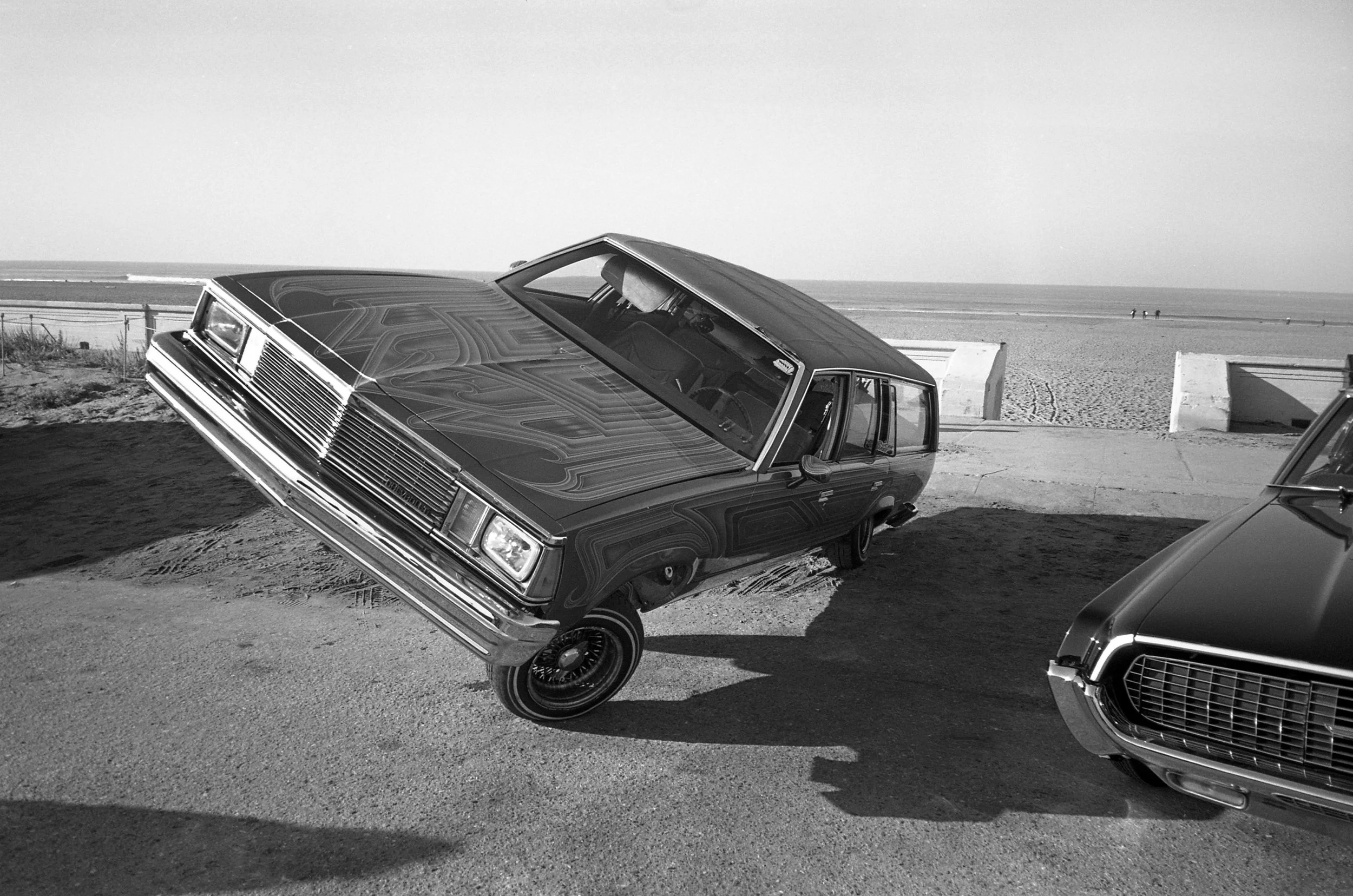
The last photo Dave shared that night at Warfield Commons is the most recent one. It’s of folks and their cars at Ocean Beach, near to where Dave lives today. He says that his love of cars and car culture dates back to the Sixties. Back then, there were no stoplights on the Great Highway. It was like a drag strip (something you’ll also hear about in our bonus episode on SF lowrider culture tomorrow). He shares fun stories of taking his mom’s car, picking up friends, and joining the racers out near the ocean. They’d stay until cops chased them away, at which point they would head to Daly City and go to Pip’s, a drive-in that existed back in the day.
Please follow Dave on Instagram @daveglass_foto. Special thanks to Mel Baker and the team at SF Public Press for hosting and producing the live event where we recorded this episode. Look for Dave’s exhibit at the San Francisco Historical Society next summer. It should stay up through the rest of 2027.
We recorded this podcast in the SF Public Press studio at Warfield Commons in August 2026.
Photography by Nate Oliveira