Rae Alexandra and “Unsung Heroines”
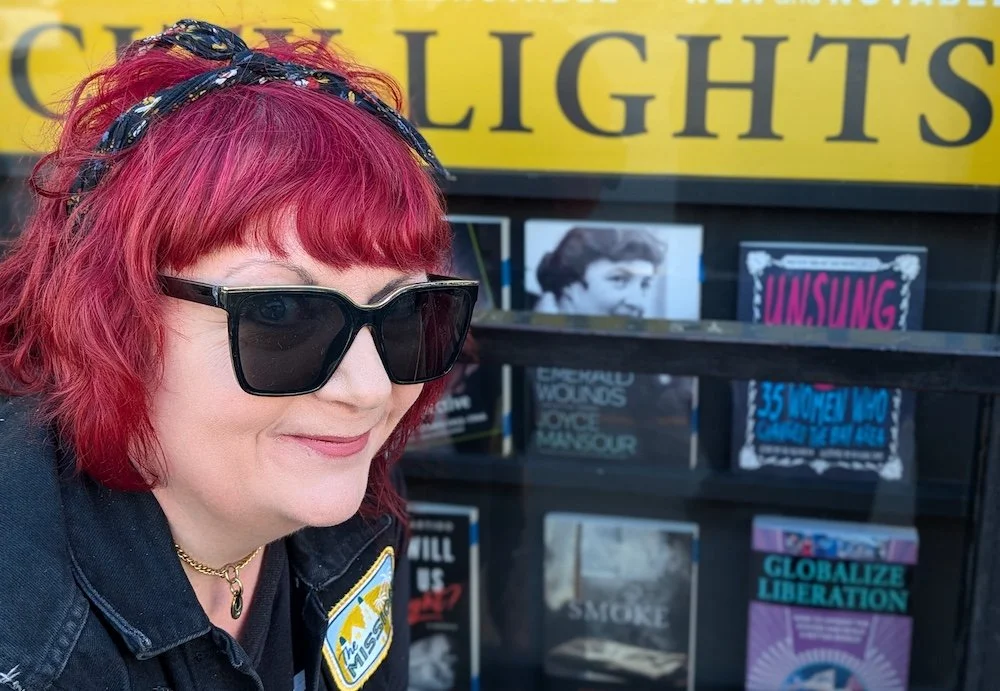
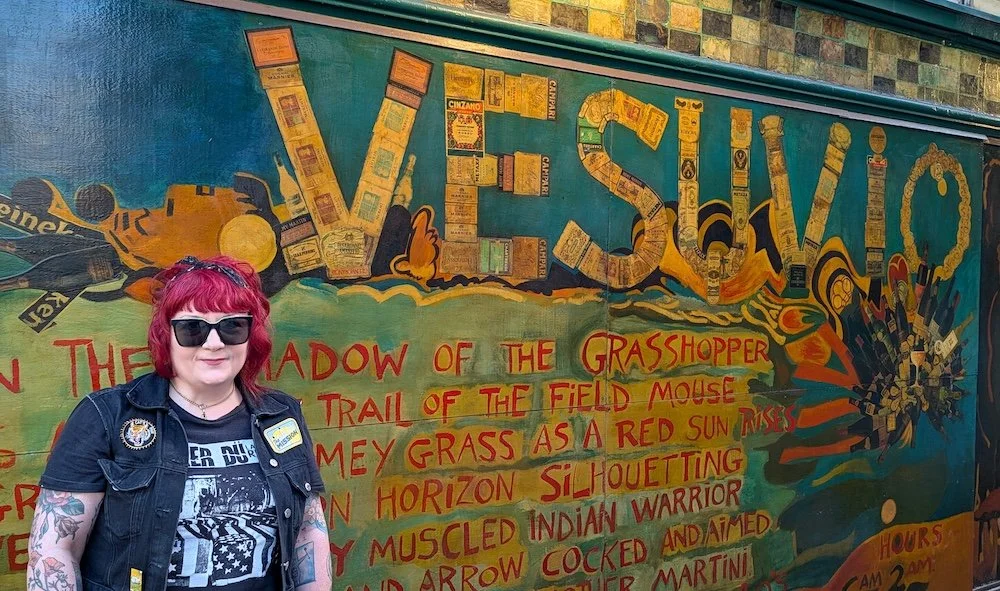
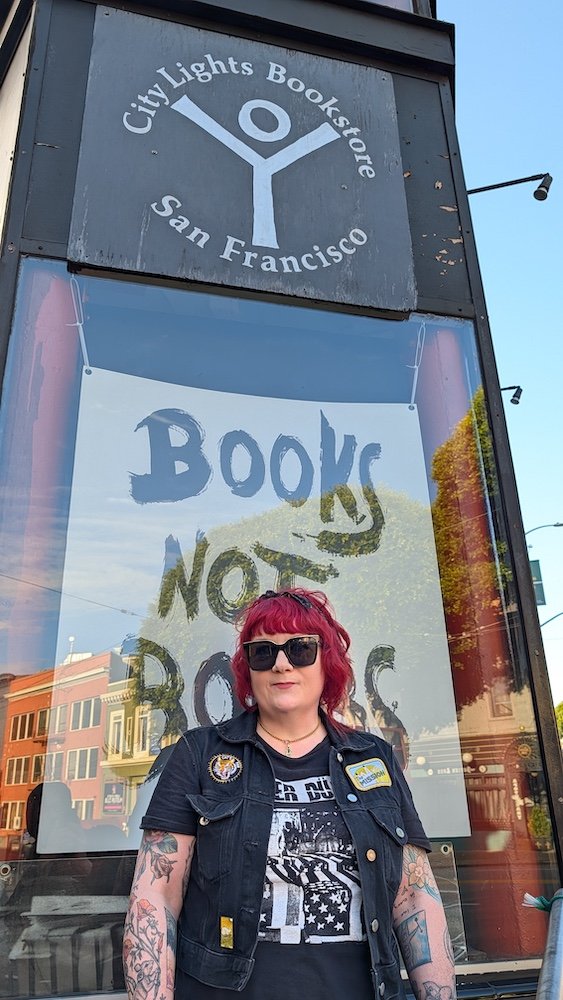
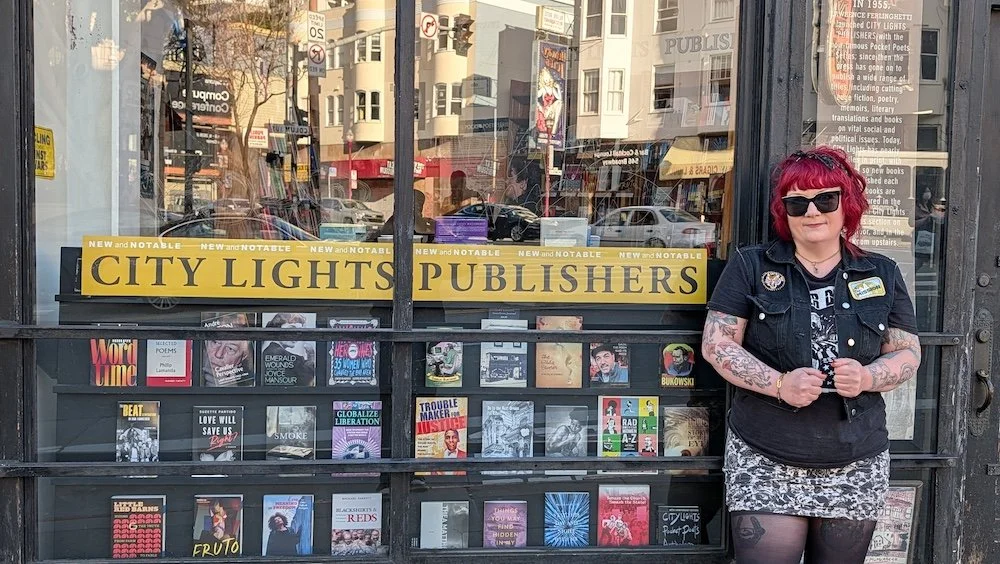
Rae Alexandra has 35 stories to share with you, plus her own.
In this Women’s History Month episode, meet and get to know Rae. She recently published a book with City Lights Publishing called UnsungHeroines: 35 Women Who Changed the Bay Area. It’s of course available at City Lights, but you can also find it at your local independent bookstore.
I read the book and could not put it down. Only toward the end of the 35 essays did I start to recognize the women Rae features. I love history and I love learning and I have mixed feelings about the fact that there are so many rad women whose stories are untold. Thank you, Rae Alexandra, for shining on a light on these incredible women.
These days, she’s a staff writer at KQED. But Rae’s story starts in Wales in the UK. She grew up in Cardiff, the capital of the country. (I learn in the conversation that Wales is a country. I also learn that “United Kingdom” and “Great Britain” are the same thing. Now, British vs. English we don’t touch, for obvious reasons. But I digress …)
Ed. note: I’ll describe my conversation with Rae as two Gen Ex journalist types with ADHD (is that redundant?) doing their best to be linear. To me, the meanderings of our talk are totally normal.
Rae says that Wales is delightful and has all the best castles, but that’s because of the number times the country has been invaded and conquered. Close to where her mom lives today is a castle that boasts the world’s largest crossbow. When I ask when Rae was born (1978), we discover that she’s a horse as in Year of the Horse (aka 2026). Cool.
Rae continued to call Cardiff home up through her college years. She didn’t go to another school outside of Wales that had accepted her because she was attached to a group of skateboarders in her hometown. After she graduated, though, she moved to London.
Music has been central for Rae as far back as she remembers (same). She shares stories of being maybe 5 and listening to the Top 40 with her cassette recorder ready to nab her favorite songs (same).
According to Rae, the English look down on the Welsh, and have for some time, based on classist generalizations. Wales is where the UK mines most of its coal. London-types consider their neighbors to the southwest feral, and in some regards, the Welsh are, she says.
In the Eighties, she remembers stories about IRA bombings appearing on the news nightly. Also, in Wales, miners went on strike and everyone knew about it. Rae says that Wales in the Eighties was essentially like listening to The Clash.
We go on a sidebar about siblings, birth order, and what it means to be the youngest, which Rae and I both are. Growing up, she was close with both her older sisters. Today, one lives in Australia and the other lives in the London suburbs.
Around age 10, Rae discovered metal. By 12, she decided that she would become a music journalist. In her teen years, she “snuck” her writing into local and college newspapers. The music journalism she consumed in those days included publications like Smash Hits, Kerrang!, NME, and Melody Maker. In fact, her first job out of college was at Kerrang!
We go on a sidebar on the whole idea of living somewhere vs. visiting, and how they’re so totally different on every level. I use Chicago, where I lived for a full six months in the Nineties, as my example. Rae offers up a stay in Brooklyn as hers.
That job at Kerrang! is what brought Rae to London, another place she found impossible to live. I ask her to expound on what it was about the place, and she indulges me. She says that you have to be obscenely wealthy to live in Central London, so most folks are forced to the outskirts. But the jobs are in the middle of town, and so you end up spending around two or three hours a day commuting underground.
It was/is also gray—the weather, the architecture—and the people in London were, as Rae describes it, hostile. When she goes into detail about the ways in which they were hostile, we agree that only you get to shit on your own hometown. People who aren’t from there aren’t allowed. It’s a rule. Look it up.
After a year working for the magazine in London, Rae met a guy from San Francisco. She’d been to The City and even spent significant time here working for Maximum Rock ‘n’ Roll. (At this point in the recording, I mistakenly call the BBQ place near Hayes and Divisadero until sometime in the early 2000s “Brothers.” It was in fact called Brother in-law’s. My apologies.)
She moved in with that guy she met, lived with him for six months in London, and then it was time for him to come home to SF. He asked her if she wanted to join him and she accepted. She had already transitioned to freelance writing for the magazine, because office life didn’t suit her, so work wasn’t so much a problem. But upon arrival, she soon discovered how difficult it was to do anything without a Social Security number.
That added an extra layer to moving here. But it wasn’t the place itself or its people that made things hard. It was the system, so to speak. Also, while she was getting settled and learning how to survive in the US without an SSN, she started to see that the guy was, let’s just say, not for her. She felt he’d been playing the long game when they lived together in London, but once back on his home turf, some of his sociopath tendencies emerged.
It was 2002 and she lived in Bernal Heights on Cortland. She spent most of her time in the Mission, just down the hill. After a short time, the guy convinced her that they needed to get married, so they moved back to London. The marriage lasted three months, and Rae returned to her new home—San Francisco.
When she came back, she experienced a stretch of housing instability. You could call it “couch surfing,” but either way, it was dicey. Six months or so later, things settled. It was easier to live cheaply in the early 2000s, also. A $5 burrito could be a whole day’s worth of food. And Rae had befriended enough bartenders that she rarely paid full-price for booze. She describes “The Blackout Triangle” of Kilowatt, Delirium, and Dr. Bombay’s. She also regularly visited Beauty Bar until that place went downhill.
In Part 2, we pick up where we left off in Part 1. We’re talking about Mission bars, and I share a story about the backroom at Delirium. Rae brings up similar stories of her own at places like Thee Parkside, and we agree that Parkside owner Malia Spanyol is the best. Rae shares a story that confirms it.
She looks back on the years before she got her SSN grateful that Kerrang! allowed her to work. She says and I agree—those jobs don’t really exist anymore. The industry itself was misogynistic, but there was also a freedom to the job. They flew her to shows all over the place. And they paid her enough to live in San Francisco.
After Rae recounts a couple of specific incidents of mistreatment she got, we go on a sidebar about the music industry specifically and entertainment industry more generally and how riddled with misogyny they are. Rae managed to get out of music journalism, but it took some time and effort. She says that when folks ask her to write about music nowadays, she recoils.
Then we talk about Rae’s new book. I share how it all came to me, and that originally it was supposed to be a bonus episode where we talked “only” about Unsung Heroines. After reading the book, I decided it needed to be a feature about this incredible woman who herself should possibly be in her own book.
Rae says that if she’d stayed in the UK, the history she’d know and would hear about constantly would revolve around royals and their lives and their wars. So she dropped history. But upon moving to San Francisco, she became curious about everything she saw and heard and read. It felt natural that at some point, she’d spend her curiosity and mental energies writing some sort of history or another. We go on a sidebar here about Emperor Norton and what a troublesome character he was.
She was working at KQED writing about pop culture. After about a year, she found herself, as she puts it, “being insufferable in bars to strangers about the fact that women had been written out of history.” Writing about history would be a new hat for Rae at KQED, but in 2018, she persuaded her editors to let her write five essays for Women’s History Month. The series was a hit.
In 2019, her department, Pop Culture, folded and she moved into KQED Arts. She’d written a couple more essays in the interim, but once in the Arts department, she really picked up the pace. In January 2020, Rae decided to turn the essays into a monthly series, upping the pace. The series had come to be known as “Rebel Girls,” a Bikini Kill reference. But that March, all the libraries closed when COVID shutdown hit.
She pivoted to library websites, but then I prompt Rae to shout out all the libraries she frequented to research her book. The SFPL History Center and the California Historical Society stand out. When I ask about women she researched who didn’t make it into the book, she points out that the series, which again predates the book, includes essays about 55 women. City Lights Publishing, who put Unsung Heroines out, settled on 35 for their edition. They wanted a digestible book, and for teen readers, they felt they needed to remove women with … let’s just say more risqué stories.
I ask Rae to pick three of her favorite essay subjects, and while she’s thinking it over, I offer some of my own. I start with Judy Heumann, the disability rights advocate who did so, so much to guarantee the rights of other disabled folks in our country. Rae mentions Judy, whom she’d been researching well before her unfortunate passing in 2023; Ruth Beckford, who figured big in Black Panther history; and Abby Fisher, a formerly enslaved woman who couldn’t read or write but, with the help of others, published a cookbook.
We take a slight detour as Rae begins to describe how they went about illustrating Abby Fisher and others, for whom there was no photographic or other visual reference. The Unsung Heroines publisher, City Lights, asked her about imagery, and when Rae told them that it’s been difficult for her, she suggested illustrations. But City Lights doesn’t do illustrated books and told Rae as much. Then City Lights’ publisher struck up a conversation with another swimmer at the pool one day. That other swimmer was Adrienne Simms. Following that talk, the publisher found Adrienne’s art, brought it to Rae, and the rest of history. Adrienne illustrated Unsung Heroines.
I ask Rae not who her favorite heroines are, but of the 35, which one or ones she’d want to join us at Vesuvio that day we recorded. Without hesitation (in fact, I believe she says the name before I finish asking), Rae offers Pat Maginnis, an incredible champion and fighter for women’s reproductive rights.
Unsung Heroines is available wherever you get books (but please, don’t use that one horrible fucking website). City Lights is one obvious choice, but most Bay Area independent bookstores should carry it. If not, ask them to order it for you. More people need to know about and read this book.
Follow Rae on Instagram @rae_alexandra_writing. She’s on Threads @rae_alexandra3.
We end with final thoughts from Rae, specifically her feelings about all those ubiquitous dumb fucking AI billboards.
We recorded this episode at Vesuvio in North Beach in February 2026.
Photography by Jeff Hunt