Sad Francisco’s Toshio Meronek
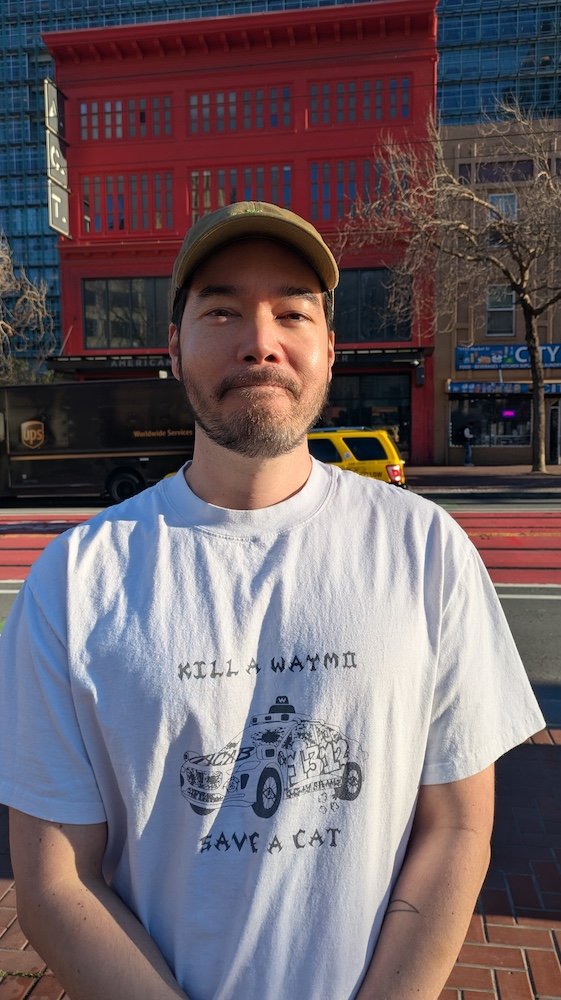
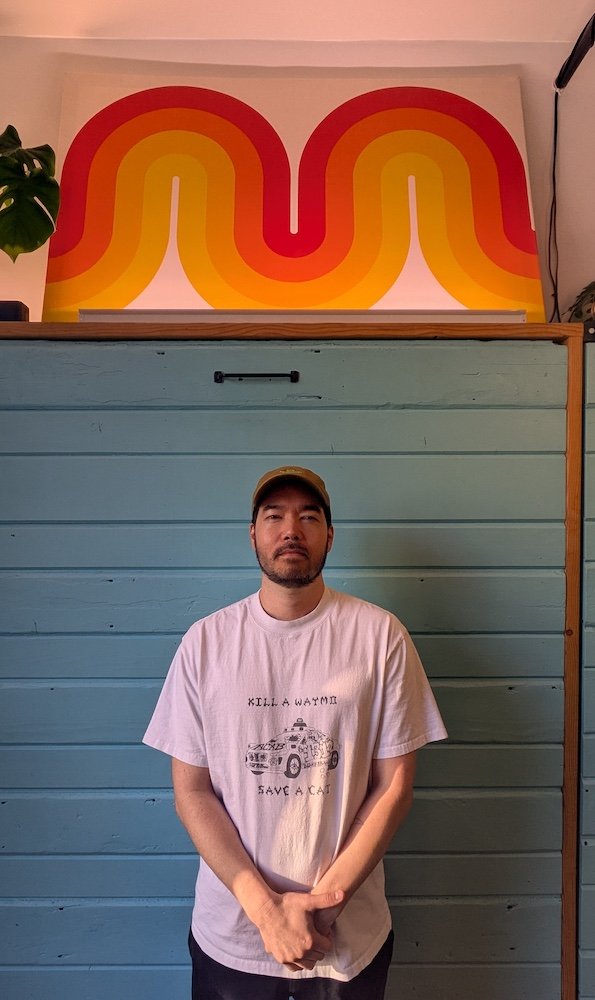
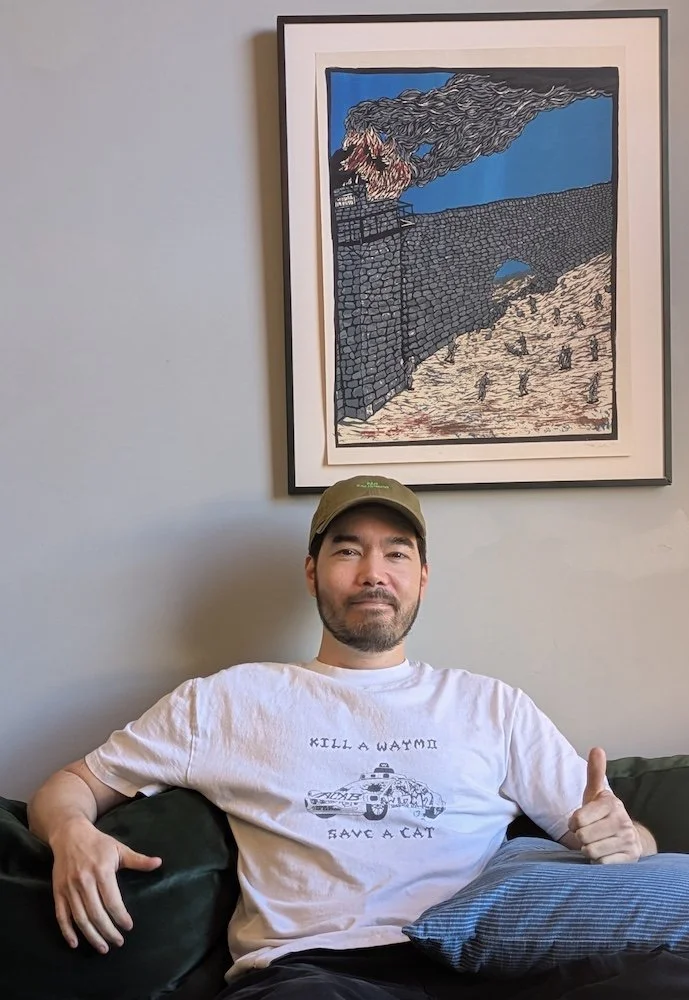
Toshio Meronek’s parents met at a bar.
In this episode, meet and get to know Toshio. Today, they do Sad Francisco, a really fucking amazing project that reports on and holds truth to power around here. I first became aware of Sad Francisco a few years ago and right away, I was struck by the deep reporting on and understanding of the many complex relationships and goings on in San Francisco and The Bay. And so I sat down with my fellow podcaster to get to know the human behind those efforts.
Toshio’s story starts with their parents. That bar where they met was in Los Angeles. Shortly after meeting, the couple moved to Germany, where Toshio’s dad had found work at a major German tech company. But after getting pregnant with Toshio, the young couple came back to Southern California—Orange County to be exact, where Toshio was born.
Some of Toshio’s earliest memories involve not really digging that infamous SoCal heat. We’ll get into this more later in Part 1, but Toshio picked Portland for college in part because of its more temperate, albeit wetter, climate.
Born in 1982, Toshio did most of their growing up in the Nineties. When I ask them what kinds of things they were into as a kid, they immediately say, “zines.” Making zines, collecting zines, living and breathing zines. We hop on a short sidebar about Riot Grrrl, a Nineties feminist punk-adjacent movement that seeped into both our lives at different points—mine early in the decade, and Toshio’s toward the end of the Nineties.
Riot Grrrl arrived in the typically and generally conservative Orange County later than a lot of other parts of the country and the world. But arrive it did, and it had an outsize impact on Toshio’s young life. Zines were huge in that subculture, too. To expound on their interests as a kid, Toshio was generally into media, curious about how others live, and also sci-fi and fantasy (think D&D). Toshio was around 13 or 14 when they started writing their own zines.
Here, we go on a sidebar about one of my favorite pet topics—Kinko’s (RIP). IYKYK.
Eventually, Toshio eschewed the ubiquitous copy+print shop and had their zines printed on newsprint paper. It was part of a deliberate attempt to appear legitimate, more like “the establishment,” something I find fascinating. They wanted people to take them seriously, and that just makes a lot of damn sense.
Music was very much a part of the Riot Grrrl movement Punk rock music to be specific. And Toshio’s early publications covered that. In fact, topics ran the gamut from music and politics to culture and community.
We turn to the topic of Toshio’s surroundings when they were a teenager. Record stores, zine shops, cafes that also had live music. They dabbled in the SoCal rave scene as well. They settled into the Candy Kids rave subculture and talk a little about that.
There’s another short sidebar where we talk about how amazing youth activism is, and how much we always need it.
As much as young Toshio was part of these communities and subcultures, they also describe this time in terms of being a loner. They also experienced a lack of self-confidence, lots of acne, therapy to work through their being Japanese and white, or hafu (another term for “hapa”), being gay. Though Toshio has grown past those struggles, they consider them powerfully formative.
Then came time to relocate and go to college. Besides Portland having more desirable weather, Toshio chose it in part because of the Northwest’s grunge legacy. College life started right around 9/11, and they started going to protests. Lots of protests.
College lasted four years, and after that, Toshio stayed behind in Portland. They got work at a magazine covering ecology for K–12 kids. They were also in bands (they play guitar, ish, sing, and play tambourine). “It felt like everybody was in an alt-country band,” they say.
And then, in 2006, they left Portland for … San Francisco.
An editing job brought Toshio here. The publication was a so-called “light-green living” outfit, targeted, as it said, to yoga moms who drive their hybrid SUVs to Whole Foods. I ask Toshio if the job was editing words, and then mention that it’s been my profession for a long-ass time. And we go on a sidebar about how important the work is. I’ll add that everyone (including editors!) needs an editor. Sorry (not sorry), AI.
That leads to yet another sidebar (can you tell we’re both podcasters?)—this one from Toshio about the nature of the “yoga mom” publication. They grew disillusioned with their work there, suffice to say.
We end Part 1 with Toshio’s early memories of visiting San Francisco, before they moved here. They involve the older men who used to be found daily playing chess off Powell and Market.
In Part 2, we pick up where we left off in Part 1. Toshio talks about those chess players at Powell and Market and other early impressions of The City before they moved here.
Having grown up in Orange County, with its underfunded public transit system, Toshio always wanted to live somewhere that had a subway. Being able to walk was important, too, in contrast with SoCal, where you pretty much need a vehicle to get anywhere. SF and The Bay checked those boxes.
Like Part 1, this episode is rife with sidebars. I guess that’s just what happens when you get two people together who both like to talk. The first one in Part 2 is about running any sort of independent media within the larger framework of late-stage capitalism, especially when the content you create is inherently anti-capitalist. You know, light stuff.
I try to get us back to Toshio’s story of moving to San Francisco, then I can’t help myself—another sidebar, this time about Craigslist, which of course Toshio used to help find a place to live in San Francisco. They were able to get work, as we’ve mentioned, but finding housing was much harder. Their first two places were in the Mission. They left the first one after only one month, thanks to a fire. Their next spot was at 24th and Bartlett, close to BART. Toshio splinters off to talk about some of the other spots they looked at and open houses they went to. “Oof,” they say.
In 2013, they were able to move into a below-market-rate apartment near Civic Center (the very home where we recorded this episode, in fact). Toshio is their own landlord, something I congratulate them on. Sometime after they moved in, they met their boyfriend. They also got exposed to more and more leftist politics in SF during this time. They talk about coming to terms with the fact that the world they want to see will probably not come about in their lifetime. That’s a hard pill to swallow, but it’s probably best to accept that and then fight like hell to overcome it.
Toshio’s light-green living magazine job afforded them the opportunity to write for further left-leaning publications like Truthout. When Al Jazeera opened its US office in The City, they got work there. They’ve also written for Them and Vice. It all served as background for Toshio to launch their own outlet—Sad Francisco.
We go on a sidebar about the corporate takeover of the news, and how local outlets and indie operations like our own have stepped in to try to fill that void. Toshio mentions some newer publications that they’re excited about, including Bay Area Current, The Phoenix Project, and Coyote Media. (Ed. note: Look for an upcoming episode with Coyote Collective founding member Soleil Ho.)
Sad Francisco started (and continues) as an effort to fill the massive gaps left by said corporate media in the Bay Area. Toshio was curious about the podcast medium, and kicked things off reading and riffing on versions of 2,000-word pieces they had already written for traditional media. They mention that we’re at a point now where every journalist, no matter the medium or the employer, should probably be diversifying the distribution of their work. I couldn’t agree more.
Sidenote: I’ve been witnessing Toshio’s move to self-facing camera reels, with them laying out whatever issue is on their mind, then expounding on it. It’s a delivery mechanism I see more and more of, in my limited social media consumption. My wife, Erin (of Bitch Talk Podcast), has begun doing more of these as well, and they seem to resonate with folks. I haven’t yet decided whether or when to do them myself for Storied. But I digress …
Toshio feels that in 2026, people are looking for authenticity. They don’t care so much if your media product is polished. They’re more interested in substance, which would be a gain for society, if true.
When I ask them how folks can find, follow, and support Sad Francisco, Toshio mentions the podcast’s Patreon page. Follow them on Instagram @sadfrancis.co. And check out their website, sadfrancis.co. They’re also available on most podcast apps and YouTube. Another sidebar here about how much I used to love Twitter (RIP).
We end the episode with my asking Toshio how they do it, how they report so well and so relentlessly on the vast amounts of sketchy shit going down in San Francisco and The Bay. Their answer involves their various journalistic jobs and gigs over the years, and how that work trained them to package up complex ideas and explain incredibly complicated scenarios in a simple, easy-to-understand way. Then Toshio and I indulge in a lovefest for 48Hills.org before wrapping.
We recorded this episode at Toshio’s home at the confluence of The Transgender District, Tenderloin, UN Plaza, and Civic Center in January 2026.
Photography by Jeff Hunt