Keiko Shimosato Carreiro and Michael Gene Sullivan of the San Francisco Mime Troupe
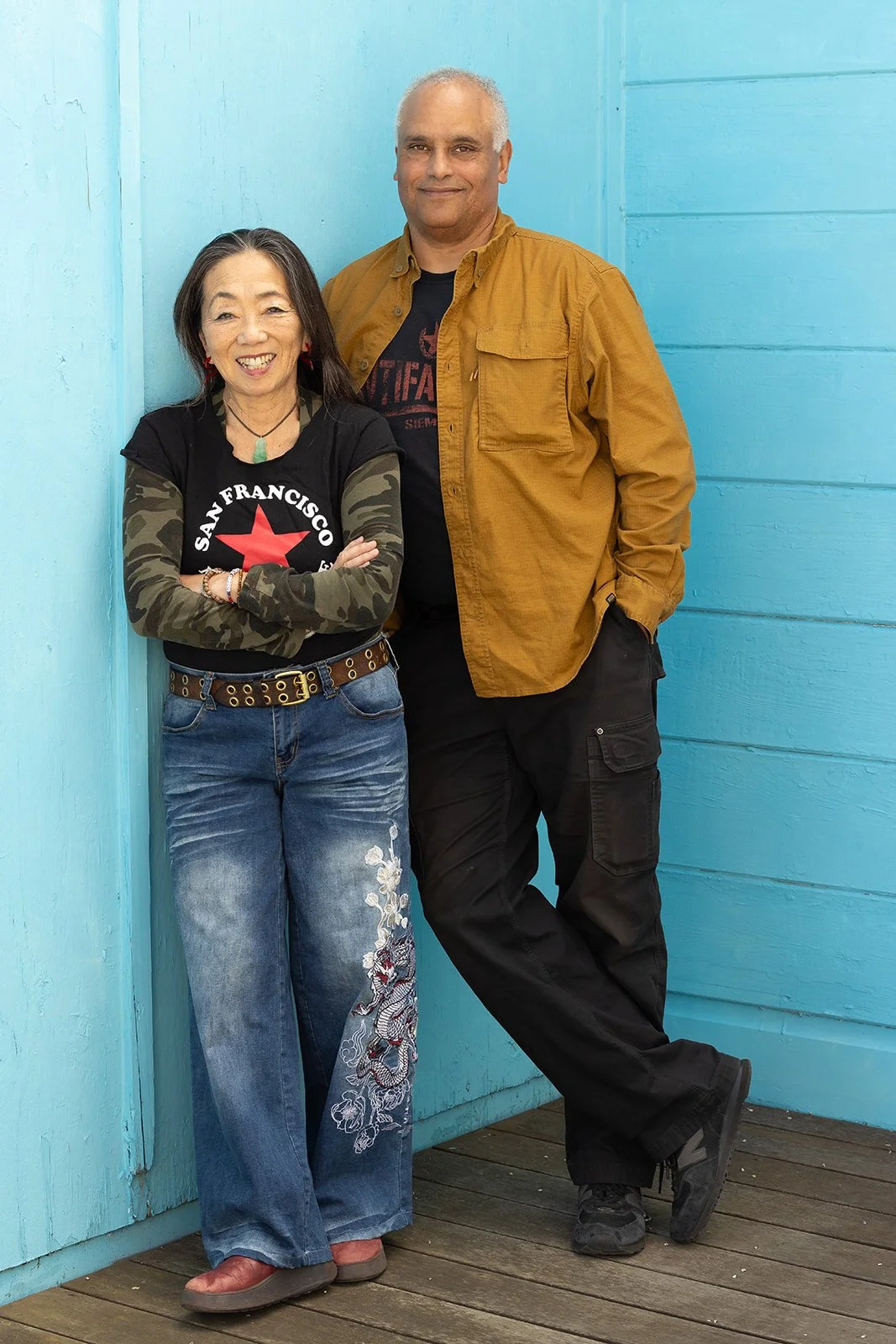
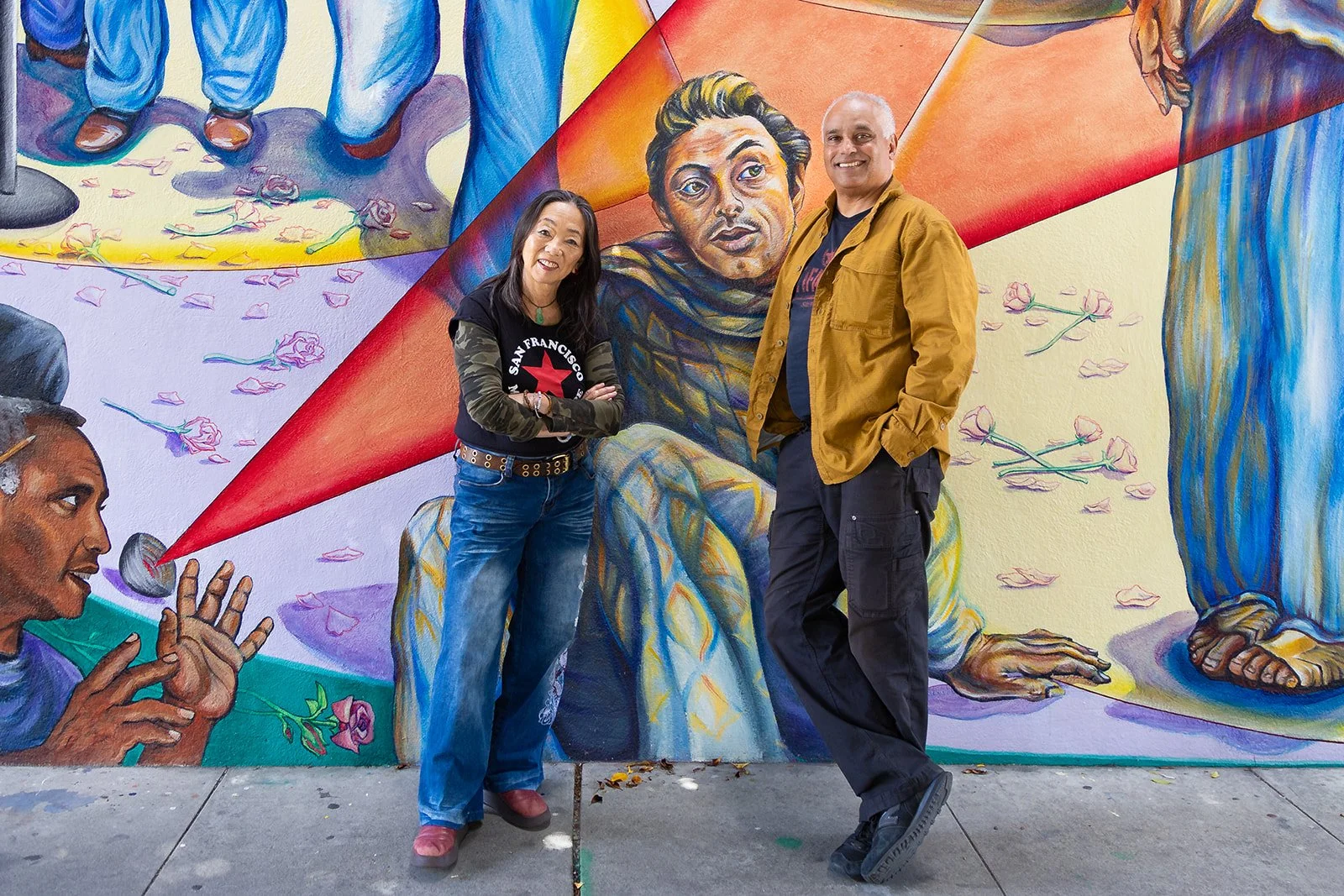
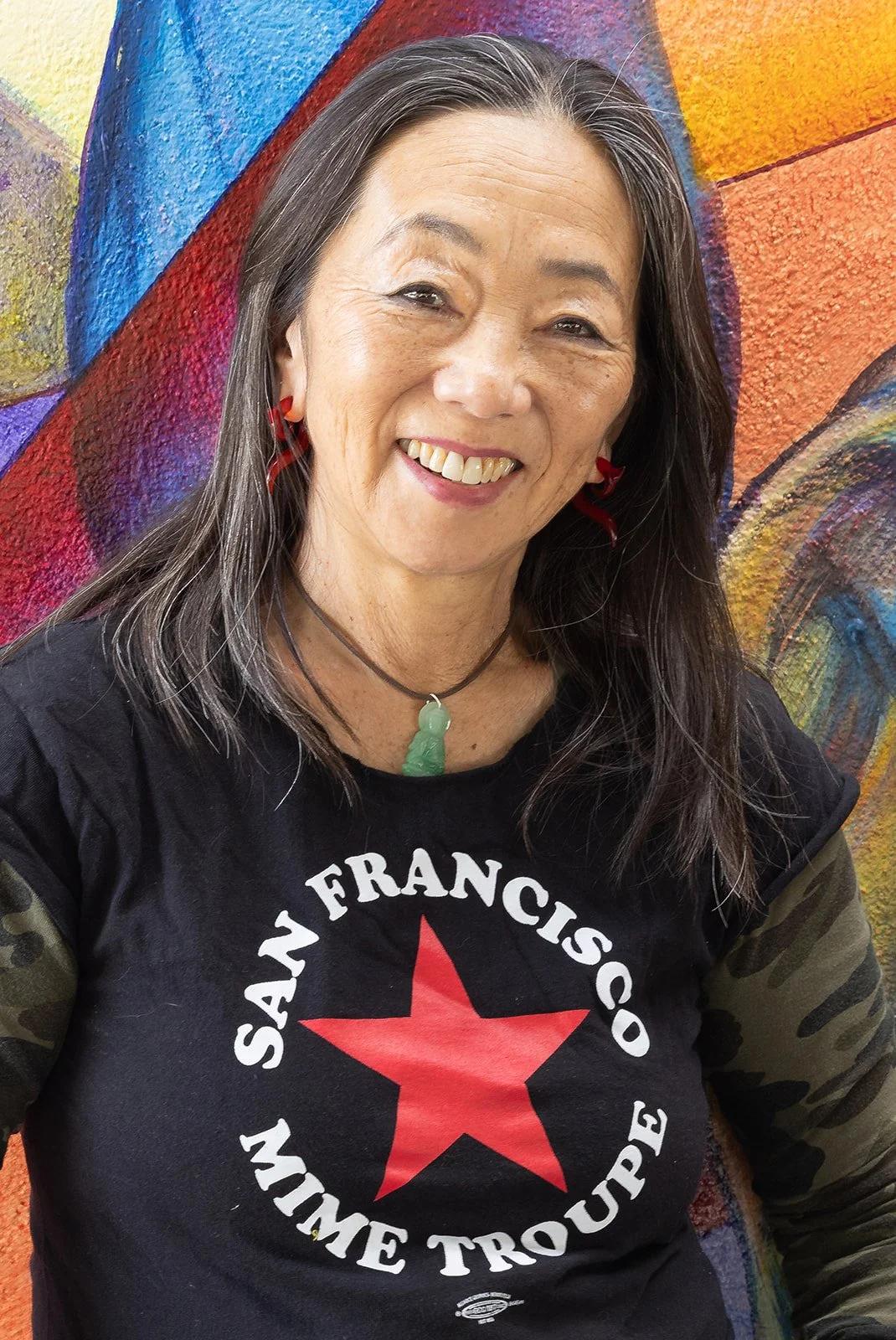
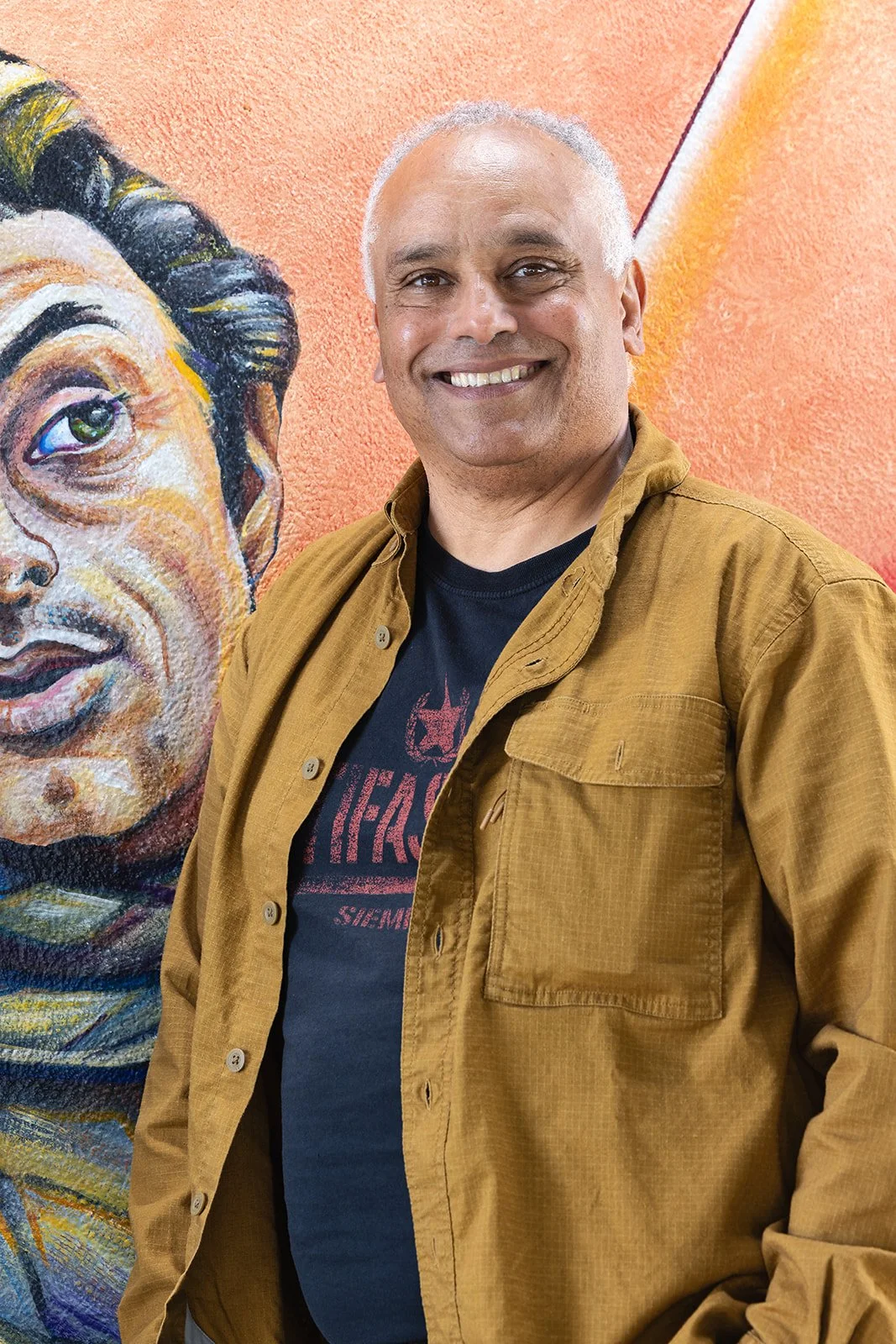
Keiko Shimosato Carreiro was born in the Bay Area … the Boston Bay Area.
In Part 1 of this episode, meet Keiko. Today, she’s a longtime member of the San Francisco Mime Troupe collective. But her story goes back to her parents’ migration to the US from Japan after World War II.
Keiko’s dad got a Fulbright scholarship to come to this country. He studied medicine. Her mom came to visit the US for one year, but in that time, met Keiko’s dad at a Japan Society picnic in Cambridge, Massachusetts. Two weeks after they met, her dad proposed, and roughly a year later, they had their first child—Keiko, named thusly because she was conceived on Cape Cod.
Because her dad was doing his residency in Boston, Keiko was born in Cambridge, just across the Charles River. She spent the first 15 years of her life in the Boston area, frequently going to protests of the war in Vietnam with her parents. Keiko also attended “Burn Your Bra” rallies in Harvard Square.
Her family comprised the only Asians in Lexington, where they lived. Keiko and her sister were the only Japanese school kids in the district. Perhaps because of that dubious distinction, reporters approached Keiko when she was very young to ask her what she thought of the US war in Vietnam.
On the other hand, there were white Americans who welcomed Keiko and her family. Her mom had a sponsor, an American woman who had been a journalist in Japan during WWII. And her dad came here on a Fulbright scholarship, after all. Both had plans to return to their home country, but meeting and considering that Japan was still something of a war-torn country, they decided to settle in Massachusetts. Before they knew it, they had three daughters.
We shift the conversation to talk about Keiko and her sisters and their sibling relationships. Keiko sees the demands from her parents on her, as the oldest child, being the highest. Going younger in age among her sisters, the demands lessen. I know this all too well, being the youngest of three boys myself.
Keiko and her youngest sister didn’t get along when they were young. Maybe it was the seven-year gap in age. But through the experience of Keiko caring for her aging and dying parents, and then losing their middle sister after their parents’ passing, the two became and remain close as adults.
Midway through her time in high school, Keiko’s dad moved his family from the Boston area to Iowa. There was a job opportunity there, but the main reason to leave went back to racism. Her dad didn’t feel that he was appreciated at the Boston area hospital where he worked.
Going from afternoons in Harvard Square to her parents’ new house amid corn fields and barns was a shock, to put it mildly. Keiko also had to say goodbye to her boyfriend back home, which, at 15, was of course devastating.
In her new city, the only place Keiko felt comfortable and welcomed was in high school band. She’d been playing flute for some time and wanted to go on to study music in college.
There were no Asian grocery stores in Iowa City at the time. Keiko’s parents helped to open the first of those. Later, folks from Vietnam, Korea, and some Southeast Asian countries arrived. And when they got there, there were food shopping options available to them.
Keiko graduated high school a year early and went to the University of Iowa. Fueled by a desire to escape a cruel world in school, she also started taking college-level courses before graduating high school. The university gave Keiko a full music scholarship to study there, in fact.
For fun, she took an acting class amid her music studies at UI. That acting class flipped a switch for Keiko. It felt more like what she wanted to do, more than music did. Eventually, she changed her major to interdisciplinary arts, which freed her up to take classes like dance and creative writing.
I take us on a sidebar here, mentioning that I believe it’s more important to find something you enjoy doing than it is being quote/unquote good at it.
Then Keiko shares the story of how she transported herself from the corn fields of Iowa to the best city in the world—San Francisco.
It involves a theater company in Canada. Keiko had married her clown teacher while still in college. He was Canadian, and the theater company called for him. But he wasn’t home and so they asked about her. They told her they didn’t like to separate couples, so they invited both of them to join.
Keiko and her now-ex met this horse-drawn theater company in the middle of its tour (where else?) in California. For the next year-and-a-half, she and her husband traveled with this theater company doing shows of a political nature, mostly around climate issues.
That caravan stage company ended up staying in the Bay Area. For Keiko, the thought of returning to Iowa to finish her master’s program, especially in the winter, was not attractive at all. She got a job here as an actor in a children’s theater company and decided to stay in The City. In 1986, the San Francisco Mime Troupe held auditions for The Dragon Lady’s Revenge. Keiko tried out and joined the collective that year.
Both sides of Michael Gene Sullivan’s family are from Detroit. In Part 2, we get to know Keiko’s fellow SFMT collective member.
Michael was born in Livonia, Michigan, a small town outside of Detroit. His parents met at a summer camp, but we need to rewind a bit before we get to that.
When his dad was a boy, he was kidnapped. Yes, really. He and his brothers, all Black boys, were taken from Detroit to work on a plantation in Louisiana. One day, three years later, a car pulled up to the plantation. Some people got out of the car, grabbed Michael’s dad and uncles, and threw them into the car (not minding the trauma these boys had already been through or might be experiencing in the moment). Much to the boys’ relief, their mom was in that car. She’d been looking for her sons the entire time.
They made it back to Michigan, but the effect of having been kidnapped and missing key years with his family stayed with Michael’s dad. Michael characterizes his dad’s side of the family as old-school gangsters.
His mom’s family were upper-working-class, many of them with jobs at Ford. The aforementioned camp was in Detroit and it was designed to bring kids from all different economic levels together. The camp held a dance, and his dad found himself with all the boys on one side of the room—on the other side, the girls, of course. No one had started dancing when one of the girls suddenly got up (on a dare from a friend), walked over to the boys, and sat in Michael’s dad’s lap. That girl was his mom, of course. They danced, talked a little, then had to separate.
The next summer, at the next camp, the two met again. Then it happened again the following year. Eventually, they started dating and fell in love. Michael’s mom’s family wasn’t too pleased, given the criminal aspect of his dad’s family. But his mom was a bit of a rebel and went with love.
The new couple settled in Detroit. They had three children—two girls and a boy, Michael, their youngest. His dad did radio work in the Army and his mom studied art. When dad got out of the service, he parlayed the tech work he’d learned into the infant industry. He got a job with National Cash Register, who relocated the family to Los Angeles.
Michael was three when his family moved to California, so he doesn’t have distinct memories of that. With the move to LA, his mom started doing more and more art, sculpting and painting. His dad worked a lot, but the couple also started getting involved in politics. They went to protests, rallies, Black Panther meetings. Michael shares his family’s story of being at a protest against LBJ’s visit to Los Angeles. It involves a family of five plus their pet rabbit climbing a tree.
The next year, 1968, was a presidential election year, and Michael’s mom worked for the Bobby Kennedy campaign. She was there on primary night, June 5, when RFK was assassinated. She was in the same room, even. Soon after that, the FBI showed up at their house looking for witnesses. To make up for known failings around the JFK assassination, the agency moved to protect witnesses around this tragedy. They sent his mom back to Detroit.
The rest of Michael’s family stayed behind. The FBI gave Michael rides to school in that time period. Two weeks later, when his mom returned, his parents decided to move the family to San Francisco. It was originally planned as a temporary visit, but they never left.
The first place his family landed was The Sunset District. He was seven, and started school in San Francisco. From there, the family moved to Bayview, Western Addition, back to The Sunset, over to The Richmond District, and back to Western Addition. I ask Michael to list his SF schools, and he obliges.
Now settling into the Bay Area, Michael’s family kept their political interests. He recalls his parents taking him with them to a Black Panthers meeting. His dad was now working in Silicon Valley as a diagnostic engineer. Michael’s mom had given up creating her own art and shifted to film publicity work.
Michael has always been a passionate person. When he was a kid, he and his sister got into film. He was also deeply interested in history. He wanted to be a history teacher when he grew up. They planned to make movies together. They wanted to remake Butch Cassidy and the Sundance Kid, but recast as two Black kids.
At school, the kids considered Michael shy. When he got to Marina Junior High, he decided on the first day of school that it wasn’t for him. And it wasn’t difficult for him to transfer, because his family had that habit of moving around The City. Michael asked his mom to drive him around town, and when he saw Roosevelt Middle School, he loved the building’s architecture. So, he transferred there. He shares the story of another transfer student, who arrived in his last year at Roosevelt, a girl so pretty he developed a crippling crush on her right away. We’ll get back to that.
He and his crush ended up going to Washington High the next year. He still wouldn’t/couldn’t talk to her, but they were both in band. She ended up in a theater group called Street of Dreams Theater Company. Michael’s best friend was also in the group, so he was around them a lot.
Michael still had his sights set on being a history professor. That, or he would write horror short stories. One day, a teacher more or less forced him to sing in choir. His crush was also in choir. And he ended up joining Street of Dreams in order to be closer to her. They graduated, and within the following year, Michael was artistic director of the company.
He started doing more and more with Street of Dreams, eventually directing shows. Both Michael and his crush, whom he could at least talk with now, if not look in the eyes, were at City College and also joined a group of friends singing at the Renaissance Faire. By then, she’d had a couple boyfriends and he a couple girlfriends. Then the two decided to go on a “test date.” They even shared a “test kiss” that night. A year later, they were dating. And today, they’re married and have three children.
Around this time, Michael’s dad took him to see a show by the San Francisco Mime Troupe. Theater was still fairly new to both of them, and Michael was blown away. He even saw Keiko performing in a show back in the day. Because he’d had some acting experience, once there was an opening, he auditioned. But they told him he was too young. Eventually, they had an actor call in sick and asked Michael to sub. And so he stepped in.
It was 1988, and Michael toured with SF Mime Troupe. And he and his wife have been with them ever since.
In Part 3, we hear from Keiko and Michael about the history of the San Francisco Mime Troupe.
In the late-1950s, a San Franciscan named R.G. Davis taught a class in movement—mime, dance, physical interpretation of stories … that sort of thing. A performing troupe sprang out of that class, and it was known as the R.G. Davis Mime Troupe. It was the era of the early Civil Rights and Anti-War movements, and the troupe became more and more political, basing much of their work around social issues of the day. The group started off doing silent mime work, but shifted later.
Michael offers us the definition of mime at this point—”the exaggeration of everyday life in story and song.” Not all mime is silent. As the audiences kept getting bigger and bigger, Davis’s troupe realized that they needed to abandon the silent style. They dived into doing commedia dell'arte with more and more masks and colorful decorations. Classic commedia almost always involved stories around class—think servants vs. rich assholes. The Davis troupe started writing mimes about civil rights, women’s rights, workers’ struggles. And they realized that changing their name to “San Francisco Mime Troupe” was a wise move.
The newly named SF Mime Troupe played around California. They went to the Midwest and East Coast. They were getting bigger and bigger and getting more and more attention. In the early 1970s, they decided to become a collective. R.G. Davis left at this point. But the troupe wanted to practice what it was “preaching” on stage. I ask Michael to tell us the difference between a collective and a co-op—basically, a co-op is shared ownership of an entity. A collective is simply the way of running the thing. It doesn’t necessarily speak to ownership.
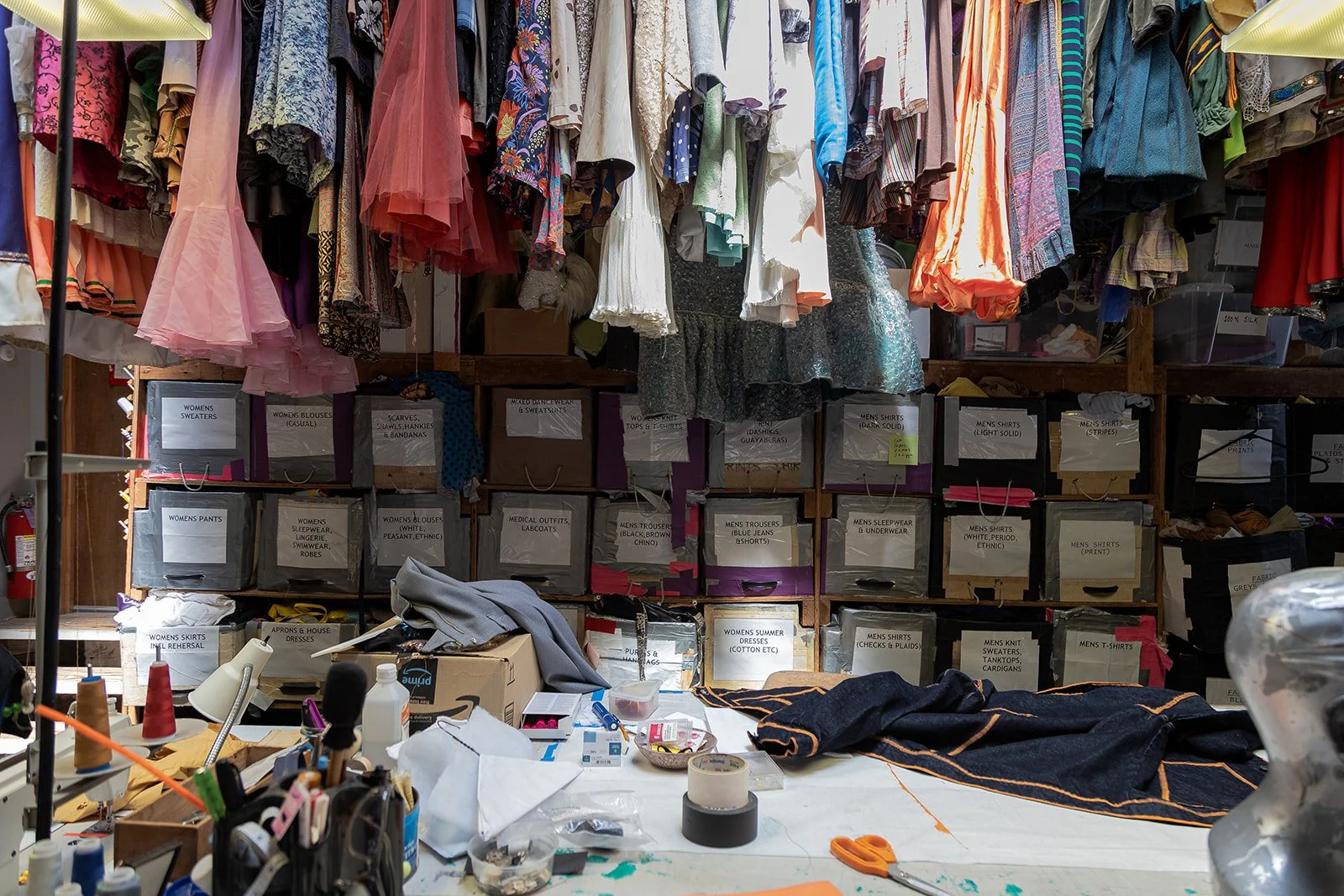
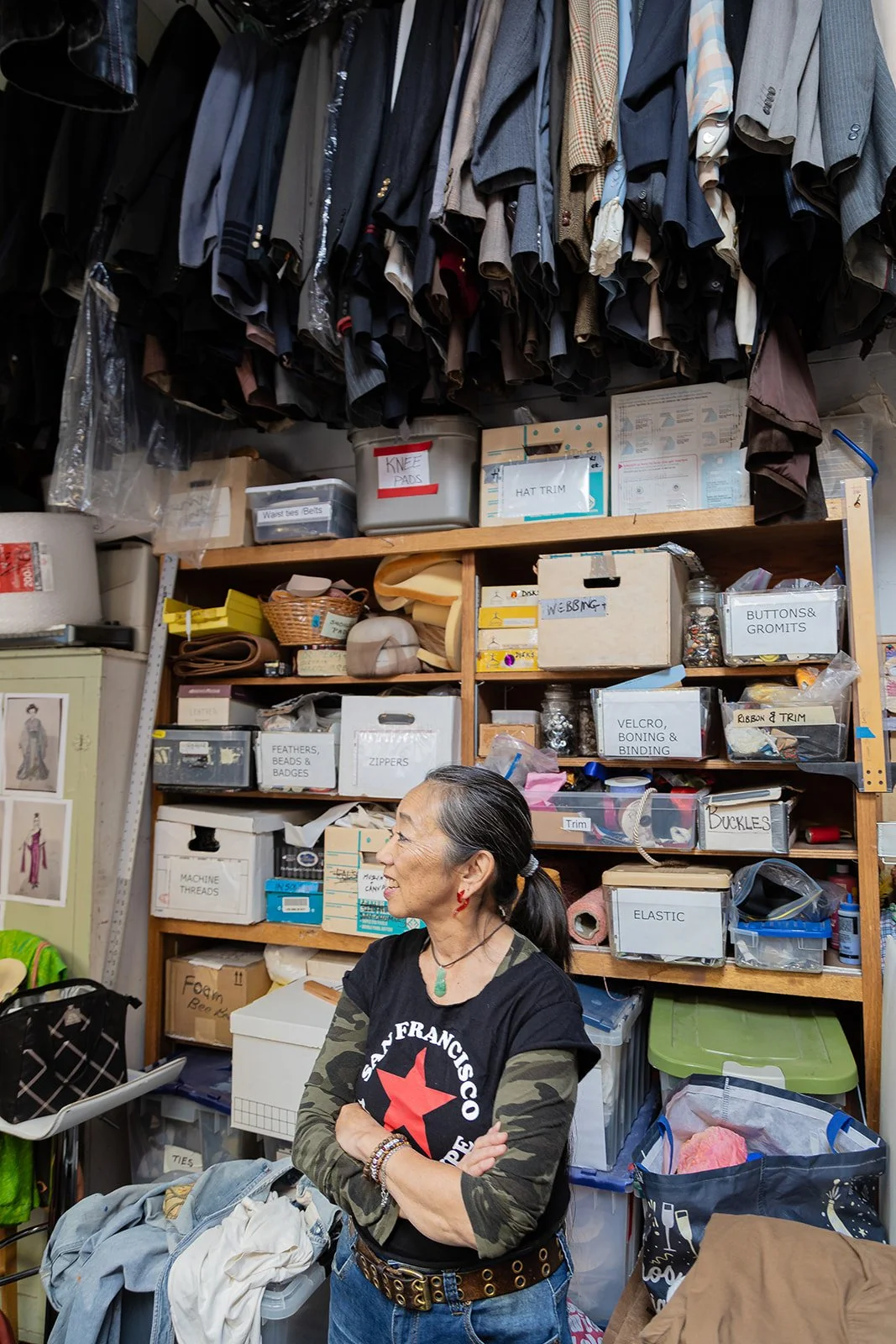
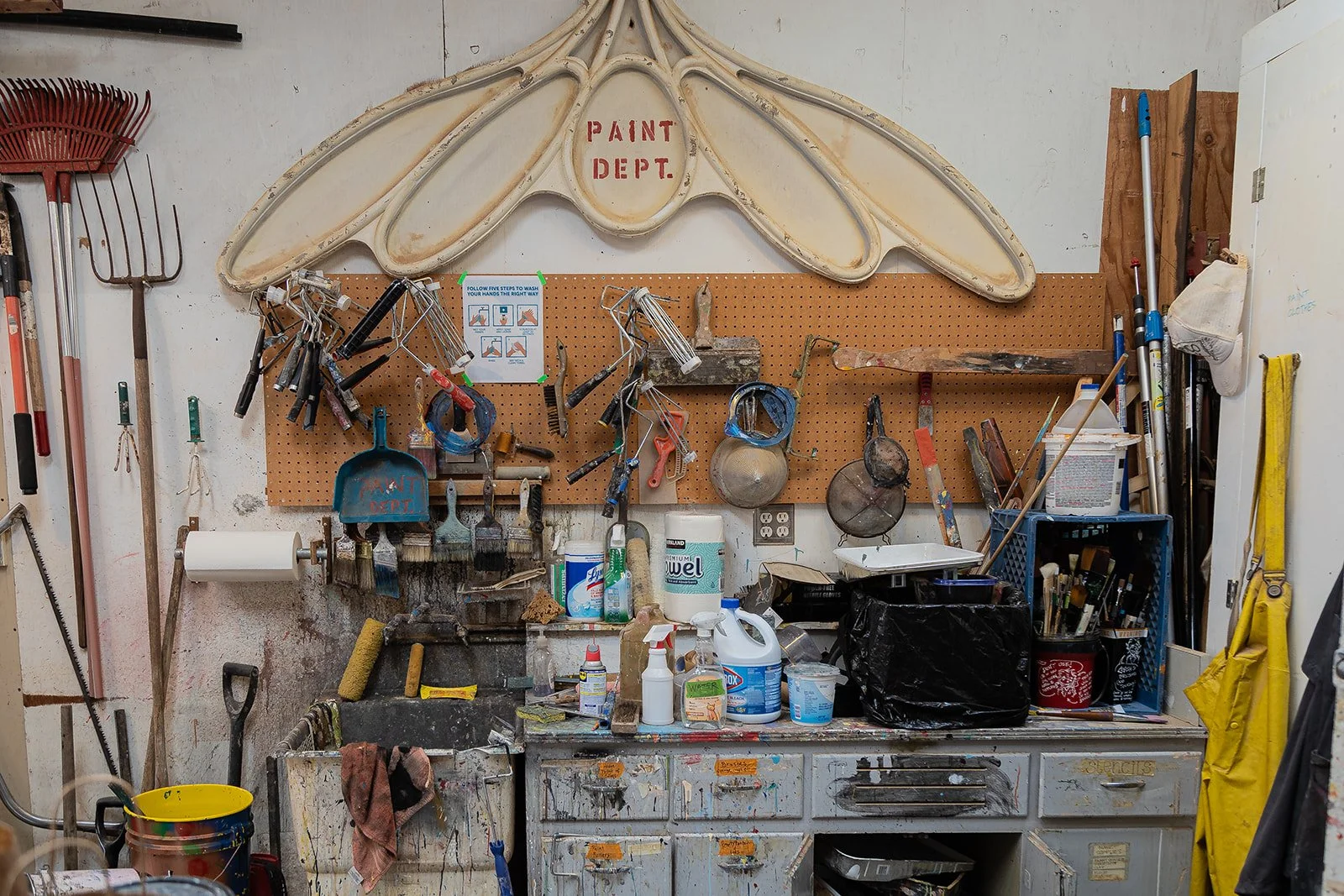
Keiko joined the collective as an actor. Soon after that, she helped to build props and design costumes and sets.
I ask Keiko and Michael to explain the “why” part of getting involved and staying with SF Mime Troupe.
Keiko takes us back to her childhood, when her parents took her to anti-war protests regularly. She cites that as a foundation for why she was attracted to the work that the SF Mime Troupe had been engaged in already for so long. She believes in the power of the people to come together and overcome whatever is thrown at us. And the fact that there’s a theater company, where she could combine all her passions, didn’t hurt at all.
For Michael, it goes back to the first SFMT show he saw. It was Factwino vs. the Moral Majority. It’s a show about free speech and manipulation. He was hooked. He’d be a fan forever. Then, he got that audition. He agrees with Keiko about the mime troupe community, but Michael goes a step further—he points to that camaraderie he finds with audiences. He appreciates being able to express his passion for politics regularly.
The Mime Troupe aims to be topical and newsworthy with whatever is going on at the time. But some things just keep repeating themselves. War, capitalism, the continued deterioration of a livable climate. Michael talks about taking pride in the collective’s diversity—race, age, economic levels. And this sets the SF Mime Troupe apart from other theater companies.
Then we start talking about what going to a Mime Troupe show can do for audiences. It can inspire and empower showgoers. It can also help them feel less alone in dark times like the present. Michael talks about how, as a performer, they need to leave the audience wanting to take action, that the revolution can’t only happen on stage.
Because Storied is my show, I assert that San Francisco isn’t the liberal bastion that many here (and away from here) believe it to be. Michael takes that idea a step further to talk about the difference between being a social liberal and an economic liberal. This town is full of social progressives. On economics, not so much. He feels, and I agree, that many folks here hold conservative economic opinions and hide that in their social progressivism. We end this segment of the recording with my assertion that the only reason our local politicians don’t admit that they’re Republicans is because you can’t win that way here. Michael agrees, and goes off on that point, much to my delight.
Keiko speaks to the sacrifices that artists living and working in San Francisco have to make. And Michael describes SF as a suburb of Silicon Valley, with many here espousing the belief that tech can solve everything. For the record: I do not believe that tech can solve everything.
We wrap with Keiko talking about the Mime Troupe’s new season, which kicks off this Friday, July 3, and runs through Sept. 7. The show is called Wreckage, a musical tragicomedy. Keiko is busy learning roles and making costumes for her castmates. Michael steps in to talk about the show in more depth. We’re in a time where people feel like everything is falling apart—economics, the environment, relationships, hope. What’s gonna be left when it’s all over? The show asks us all, “What do you have to let go of to move on?”
Find out more and donate at the San Francisco Mime Troupe website. Follow them on Instagram @sftroupers.
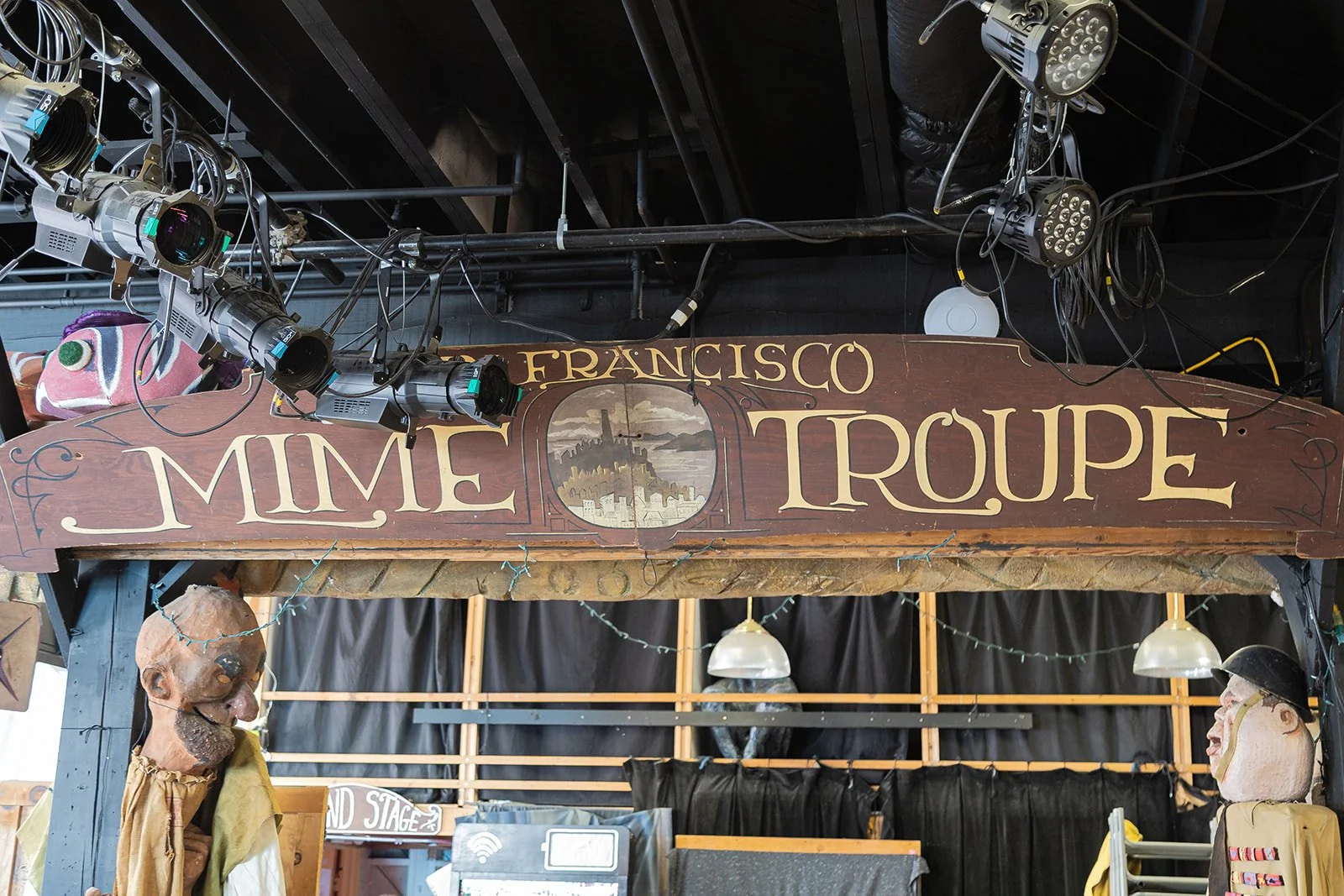
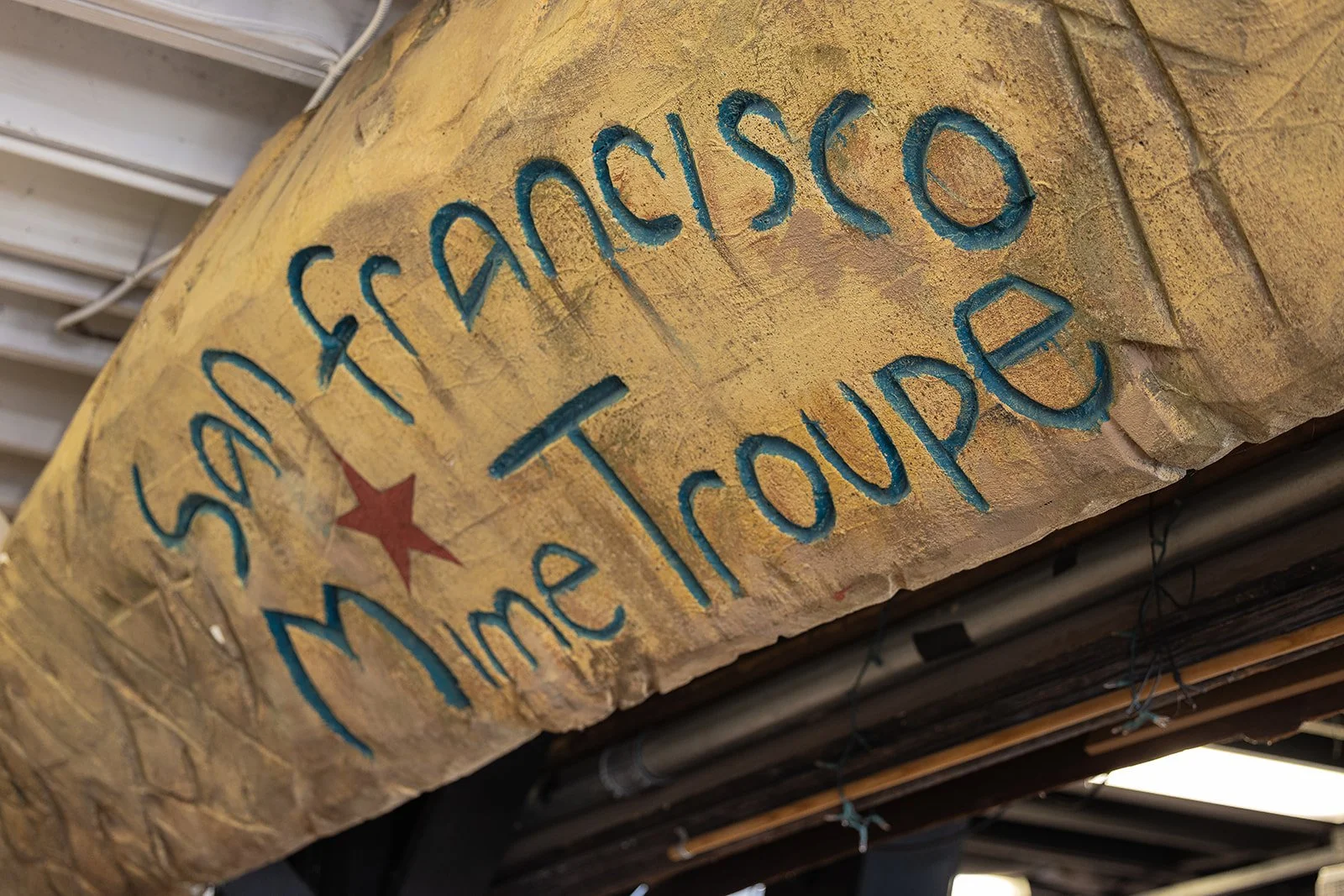
We recorded this podcast at the SF Mime Troupe studio in the The Mission in June 2026.
Photography by Marcella Sanchez