Jenny Chan/Pacific Atrocities Education
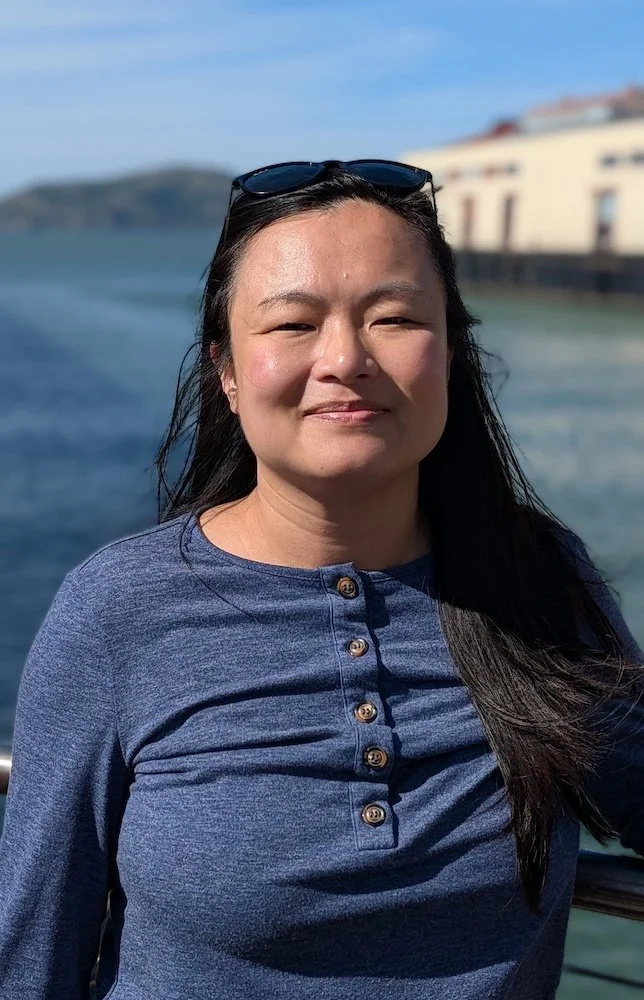
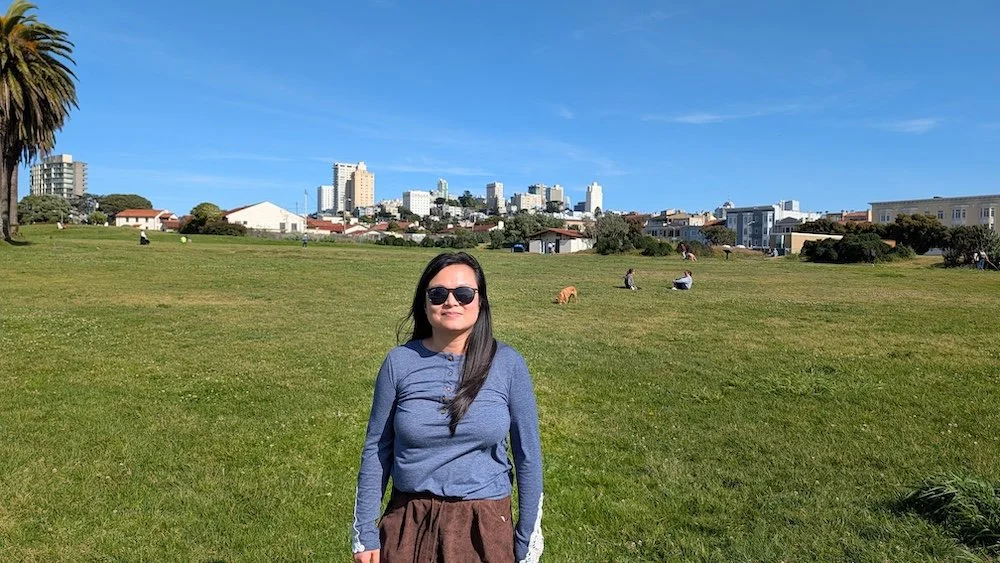
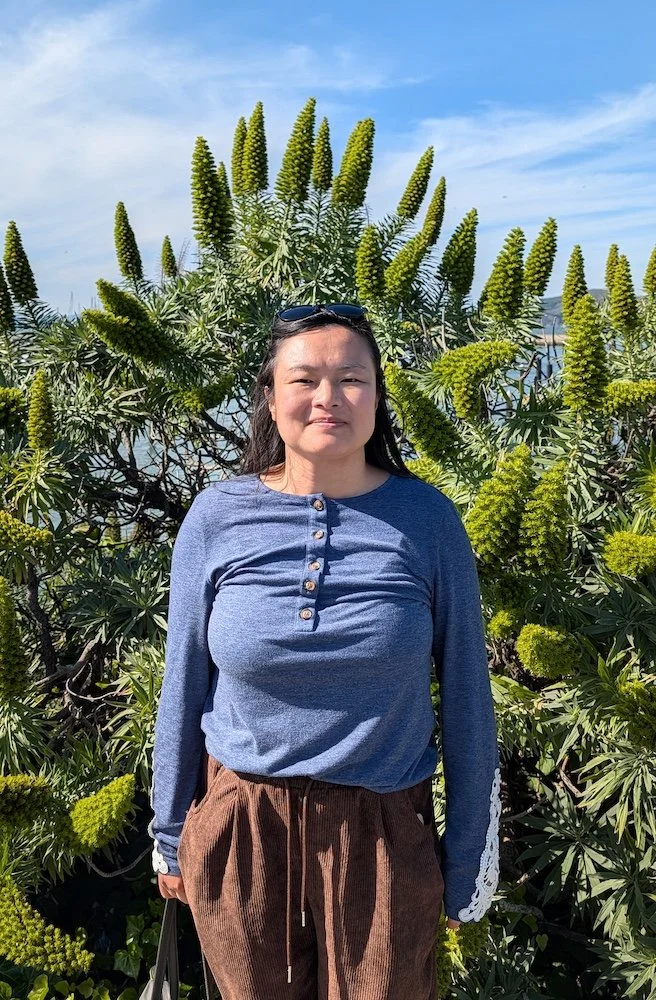
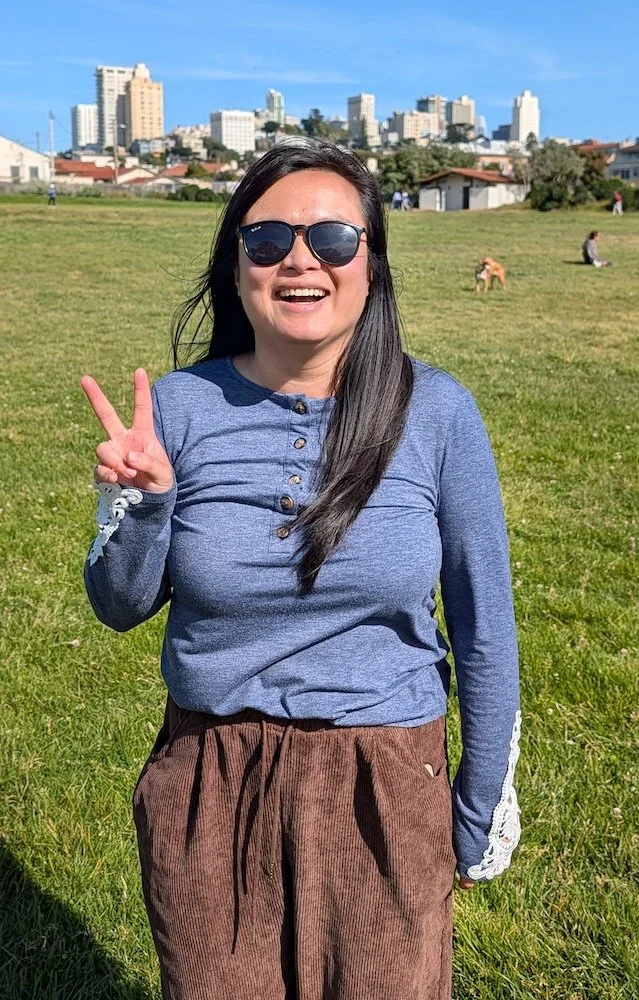
Ed. note: We recorded this episode outside on a windy day near The Bay. Apologies for the wind gusts you’ll hear throughout. Please be advised that there’s some very heavy subject matter discussed in this episode.
Jenny Chan found Storied: San Francisco thanks to Toshio from Sad Francisco. Jenny and I kick off her episode talking about Toshio, in fact.
Jenny was born in Hong Kong. Growing up, her dad’s mom babysat her a lot. Young Jenny really loved anime and would turn it on at grandma’s house. When she did this, her Chinese grandmother would get upset, and Jenny didn’t know why. She thought maybe her grandma was senile.
Later in Jenny’s life, when her grandmother passed away and she helped clean and organize her home in China, she discovered items her grandma kept that pointed to a life spent under Japanese occupation before and during World War II.
We mentioned anime, but when Jenny was a kid, she just loved Japanese culture all around. She indulged in manga whenever she could save up enough money. As with the anime, her grandma didn’t take kindly to these Japanese things in her home.
When she was 10, Jenny’s parents split up. She and her older brother then joined their mom and moved to the US. When Jenny remarks that she’s not sure how her mom did it, we go on a sidebar. Jenny shares that her mom grew up during the time of the US war in Vietnam, so she’s a survivor. I add that, simply, women are amazing.
In US schools, Jenny learned about the Holocaust. She also learned about Pearl Harbor, but like most school-age kids in this country, it was in the context of what got the US into WWII. Japanese colonialism and dominance in east Asia never really came up.
Her family came straight from Hong Kong to San Francisco in 2000. Members of her mom’s family had already been here, dating back to the Seventies and Eighties. Jenny and her mom and brother lived in the Tenderloin when they arrived. She saw the dirty streets in that hood and wondered why they traded Hong Kong skyscraper living for this. Her mom told her that for many reasons, including not having to buy school uniforms, life in SF was more affordable.
Jenny’s run of schools in The City—Lafayette, Presidio, Washington High.
I ask her if she experienced culture shock moving halfway around the world. She says yes and points to knowing only people from Hong Kong when she lived there. Here, she quickly learned that there are folks from all over China and differences abound. She says also that Chinese people she met in San Francisco or The Bay were stuck in whatever era they moved here during, and that was sometimes startling.
We go on a sidebar here after Jenny asks me about my own move here from Texas in 2000.
Jenny spent a lot of time in the school library, including during lunches. She dedicated herself to learning from an early age. She recognized the hardships her family was going through and saw education as a way to climb out of that. She used her 45-minute Muni commutes from the Tenderloin to school in the Richmond to read and do homework.
Her mom worked in restaurants here in The City. Jenny would go with her mom to places like the bank to do the translation. Jenny was learning about life in the US in real time and for practical reasons.
At my prompting, Jenny and I rap about all the awesome food in the Little Saigon area of the Tenderloin. I share the story of coming home from my trip to Vietnam and eating at Turtle Tower right away because I missed the food of that incredible country.
Jenny lived in the Tenderloin through all her public school days in San Francisco. When her paternal grandmother passed away, she went back to China to clean out her home, as we’ve mentioned. And that’s when Jenny and other members of her family started finding items—military yen, rice-rationing coupons—that pointed to life spent under occupation. Back home, Jenny had found a decent job after college, but was feeling stuck. The revelation of her grandmother’s lived experience was a light bulb.
It was around this time that Jenny realized a massive hole in her US education. Why didn’t she learn about the Japanese occupation of Hong Kong, for example? Most of the emphasis was on the war in Europe, with Pearl Harbor and later the nuclear bombing of Hiroshima and Nagasaki being the main subjects of the history of war in the Asian theater. In her own words, Jenny went “into a deep rabbit hole” to learn those untold stories.
Her first stop was the library, where she discovered books like The Rape of Nanking by Iris Chang and The Rising Sun by John Toland. The more she learned, the more she sought existing nonprofits she could join forces with to amplify the stories of the Japanese occupation of China. To her dismay, there weren’t any.
It was around 2012 or 2013, and Jenny figured that she already knew how to live without much income. And so, she decided to start her own company—a nonprofit dedicated to getting those stories out to the world. Pacific Atrocities Education was born.
In Part 2, we pick up where we left off in Part 1. Jenny left San Francisco for college, heading east to go to school at the University of Illinois Urbana-Champaign. Part of it was wanting a change of scenery. As she says, she “wanted to see snow.” But all it took was a few winters before she realized how good the weather in SF is. She also wanted to return to help take care of her mom, who was getting older.
This was around the time that Jenny went to China and came back determined to spread the untold histories of what happened in her homeland during WWII. The nonprofit learning curve was steep, and it was almost certainly going to mean shifting gears lifestyle-wise, due to not having as much income.
During the first year of Pacific Atrocities Education’s life, it was fiscally sponsored by Intersection for the Arts, an SF-based arts nonprofit. Jenny enrolled in and went to as many workshops as she could. She felt generally well-respected and taken care of.
With her nascent nonprofit off and running, Jenny traveled to a part of China she had never been to before—Shanxi—to visit and talk with women who survived the war as so-called comfort women (think “sex slaves”). Jenny goes on a sidebar here to talk about some of the things the Japanese did to women during their occupation of China. It involved the Japanese not wanting their soldiers to pick up STDs while in a foreign country. If they could control the situation, i.e., enslave Chinese women to have sex with their soldiers, they could solve that “problem.” So disgusting.
Hearing these women’s stories wasn’t easy for Jenny. One story involved one of the women being pregnant after the war ended. She went back to live with her mother, who helped her along. When the baby was born, they abandoned it. Just horrible all around. We sidebar, a little, to talk about the ripple effect of wars and how it’s not just tanks and bombs and guns and soldiers fighting other soldiers. There are untold numbers of innocent folks caught up in the destruction, folks whose lives are forever upended, if they even survive.
Jenny says that the experience on that trip to China gave her perspective on her own childhood in the Tenderloin. She thought maybe it wasn’t so bad after all.
It wasn’t only women in China. She went and spoke with women in California’s Central Coast area about their own experiences as “comfort women.” These were Filipinas who relocated to the US after the war. Most of their families didn’t know their stories. And it wasn’t until the Obama era that light started to be shone on them and what they’d been through. Obama’s administration was the first to recognize them, but it was complicated, to say the least.
Jenny talks about the delicacy of what she set out to do. Specifically, the difficulty of balancing the need to share these stories, but also to be respectful of the lives impacted by them. In addition to the research she was undertaking for Pacific Atrocities Education, Jenny was also writing a book on the topic. She was able to scan documents from the National Archives, documents the US has due to its occupation of Japan following World War II. One of the more alarming things she found in digging through archives was that the United States traded immunity with Japan’s Unit 731 scientists, whose work involved developing biological weapons. Yikes.
She goes on to describe other atrocious acts the Japanese undertook in China, stuff so horrible and inhumane I have trouble enumerating it here. I ask Jenny how she handles learning about such terrible stuff. She chalks it up to its being mission-driven work. We chat a little about how the people doing bad things never get held accountable, something true to this day.
That immunity mentioned above was given to the Japanese scientists in exchange for the information contained in their research of biological weapons, naturally. You read that right: The US looked the other way while essentially poaching incredibly deadly weapons from its vanquished enemy.
Please visit pacificatrocities.org to learn more and get involved. Their YouTube channel is called Pacific Front Untold. Follow them on Instagram @pacificatrocitiesedu.
We recorded this episode at Fort Mason in April 2026.
Photography by Jeff Hunt